
November 9, 2026
Worn carpet isn’t automatically damage, and fresh paint isn’t automatically required at lease end. In a New Zealand commercial lease, thinning carpet fibres are generally fair wear and tear, while cigarette burns and rips are damage. Paint and carpet obligations depend on the lease wording and the premises’ condition.
It’s easy to assume ordinary use should be treated differently from damage. That distinction matters, but a commercial lease can also include an express make-good clause requiring reinstatement. Make-good obligations aren’t implied, so the lease terms are central to deciding what work may be required.
This fair wear and tear commercial lease guide for NZ explains how carpet and paint are assessed, when a landlord and tenant may agree to settle make-good work in cash, and what reinstatement standards can apply. It also outlines how lease wording, the premises’ condition and tenant alterations can affect the end-of-lease outcome.
Key Takeaways
- Read the make-good clause closely: commercial lease obligations depend on the lease wording and are not implied.
- Separate ordinary ageing from damage when assessing carpet and paint. The condition of each surface can affect the outcome.
- A landlord and tenant may agree to settle make-good work with a cash payment instead of completing the work.
- Allow for the lease’s reinstatement standard. Removing tenant fixtures or reinstating services can affect the scope of work.
Table of Contents
Property Law Act implied rights and obligations
The Property Law Act 2007 implies rights and obligations into New Zealand leases, but does not imply a make-good duty. For commercial premises, repair and reinstatement requirements depend on express lease terms.
Condition and fair wear assessment
Fair wear and tear is deterioration from ordinary use over time, rather than damage or neglect. A tenant’s responsibility depends on the premises’ original and overall condition. For example, faded paint across a well-used office may reflect normal ageing, while a localised impact mark may indicate damage. Assessing the whole property helps distinguish general wear from isolated problems. The premises’ quality and condition at handover also matter when comparing its state at lease end.
Assessing premises, fixtures and equipment
Assessment considers each surface, fixture and item in its setting and use. Thinning carpet fibres are usually fair wear and tear; cigarette burns and rips are damage. Paint should likewise be judged against its starting condition and ordinary use, rather than treated as automatically needing replacement. A dishwasher failing after 15 years of good service may have reached a reasonable lifespan. Tenant alterations, fitout effects or a change in business use require separate consideration under the lease.
Lease terms and tenancy context
Lease wording sets the standard, while premises age and tenancy length help explain deterioration. A six-month tenancy and an eight-year tenancy would not normally produce the same expected wear. New Zealand commercial leases are governed by the Property Law Act 2007, not the Residential Tenancies Act 1986. Occupant numbers and the permitted business use can also affect how surfaces and shared areas are used. A clause requiring removal of alterations can apply independently of ordinary wear.
Start and end of lease evidence
A written schedule of condition and dated photographs record the premises at handover. Document carpet, paint, fixtures and equipment, including existing marks or wear. At lease end, comparable photographs and inspection notes show what changed during the tenancy. Keep relevant repair invoices and records of alterations. These documents help both parties assess the starting condition, ordinary deterioration and specific damage against the lease terms.
Cash settlements for make-good claims
A landlord and tenant may agree to settle make-good work with a cash payment instead of completing reinstatement. A landlord may also claim damages for reinstatement costs where the lease supports that claim. The lease wording remains central: a settlement addresses an obligation that applies under the agreement, rather than creating a general duty to upgrade the premises.
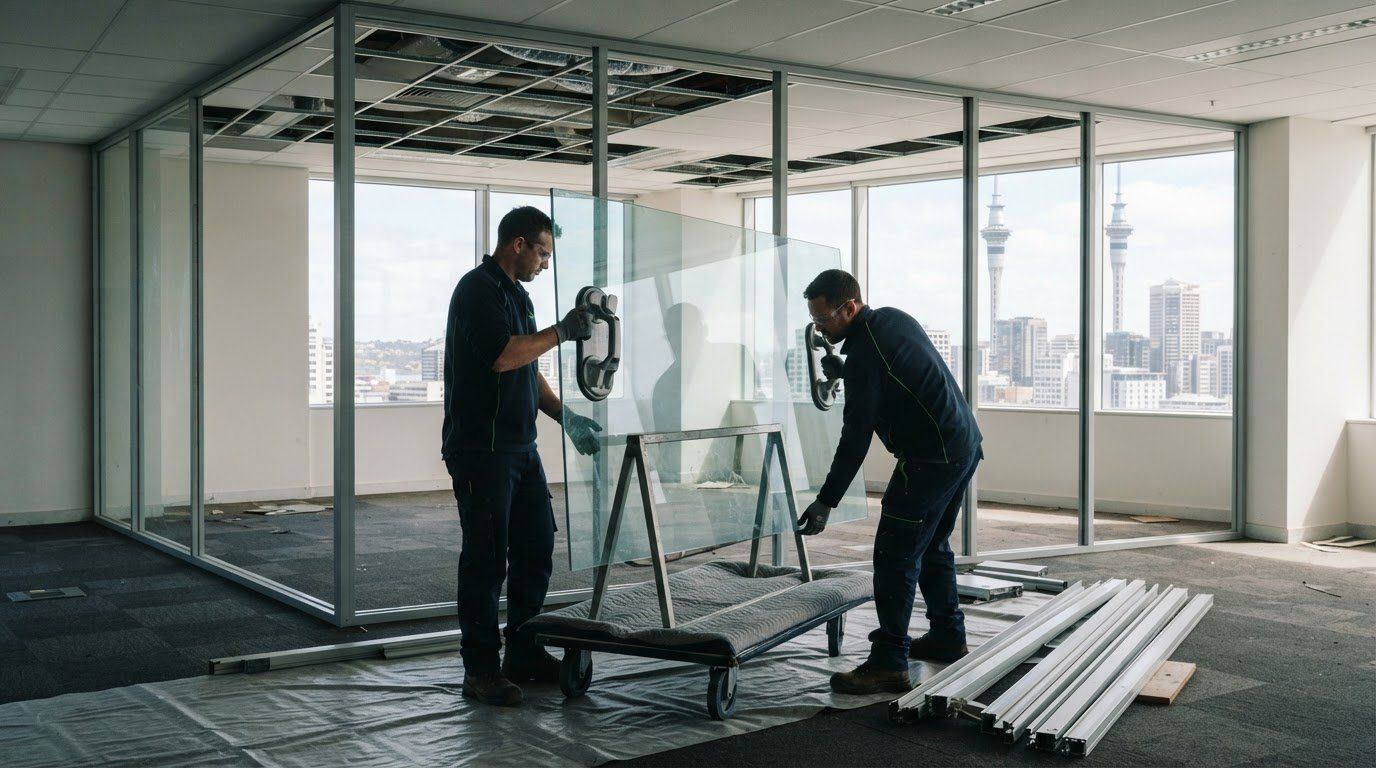
Start by defining the work covered by the claim. For example, if a tenant-installed partition must be removed, identify whether the settlement covers removal, disposal and making good the affected floor or wall. Keep ordinary wear separate from damage and tenant alterations. A payment for one item should not be treated as agreement to settle unrelated defects unless the written terms say so.
The proposed amount should relate to the reinstatement scope. Useful supporting material can include the relevant lease clause, the handover condition record, end-of-lease photographs, an itemised scope and contractor estimates. These details help explain how the figure relates to the required work. If carpet is worn but the lease excludes fair wear and tear, distinguish that from a ripped section before including carpet replacement in a settlement.
Put the agreed terms in writing before payment. State the amount in NZD, the work or claim it settles, payment timing and whether the tenant must complete any remaining work. Both parties should retain the agreement and supporting records. Clear wording reduces uncertainty about whether the payment covers a particular repair, all make-good obligations, or only an agreed part of the claim.
For a practical handover plan, commercial property maintenance support can help organise work around the agreed scope. It does not replace agreement on the lease obligation or settlement terms. Keep those terms tied to the specific premises, the documented condition and the reinstatement work being resolved.
Common reinstatement standards and relative costs
New Zealand commercial leases commonly require the tenant to restore premises to their original condition at lease expiry, excluding fair wear and tear. The agreement may also require removal of fixtures, fittings and alterations. The exact standard varies between leases, so the tenant’s obligation depends on the wording and the premises’ condition at handover.
Make-good work is often required by lease expiry. The lease may also trigger obligations on early termination, assignment, subletting or renewal. Notice periods and deadlines depend on the agreement. Read the relevant clauses together, including notice requirements, permitted alterations and the required completion date. A partition installed during a tenancy, for example, may need to be removed before the tenant hands back the premises.
Costs depend on the reinstatement standard and the complexity of the work, rather than a standard commercial rate. A simple removal task can involve less work than a fitout with extensive joinery, partitions and altered services. Waste disposal and after-hours work can add to the scope. Any amount claimed should relate to the specific work required by the lease, such as removing partitions and reinstating affected services.
For a clear assessment, separate each task in the scope: fixture removal, service reinstatement, repairs to affected surfaces and waste disposal. Compare those tasks with the lease and handover records. An itemised scope makes it easier to identify which work arises from tenant alterations and which relates to ordinary deterioration. It also gives both parties a practical basis for discussing a cash settlement or completed work.
If the landlord and tenant dispute the required work or claim, they can use mediation or arbitration. Mediation is voluntary, and the mediator cannot impose a decision; a written settlement can be legally enforceable. An arbitral award can be enforced through the courts. These routes address disagreement, while the lease and evidence remain central to assessing the reinstatement obligation.
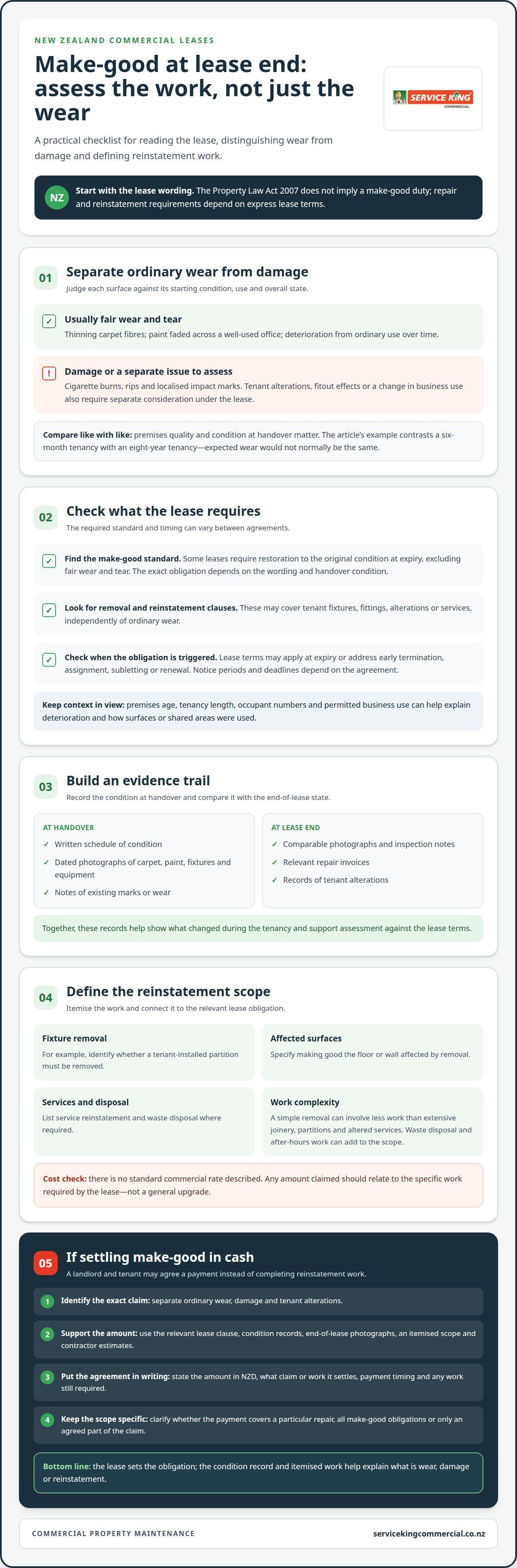
Fair wear and tear for carpet and paint
Carpet and paint claims depend on the lease wording and the difference between ordinary deterioration and damage. Handover records help the parties assess changes to each surface.
Carpet and paint wear
Fair wear and tear is gradual deterioration from normal use, rather than damage caused during the tenancy. It matters because a worn surface does not automatically mean the tenant must replace or repaint it. Thinning carpet fibres are generally fair wear and tear, while cigarette burns and rips are damage. Paint fading with use differs from a deep gouge. A guide to fair wear and tear in NZ commercial leases helps tenants distinguish these conditions.
Payment for repainting, replacement and repairs
The lease determines who pays for repainting, carpet replacement and repairs at lease end. A make-good clause may require reinstatement, while an exception for fair wear and tear can exclude ordinary deterioration. The tenant may be responsible for damage or alterations covered by the agreement. The landlord’s claim should identify the relevant lease term and the work required, rather than treating every aged surface as tenant damage.
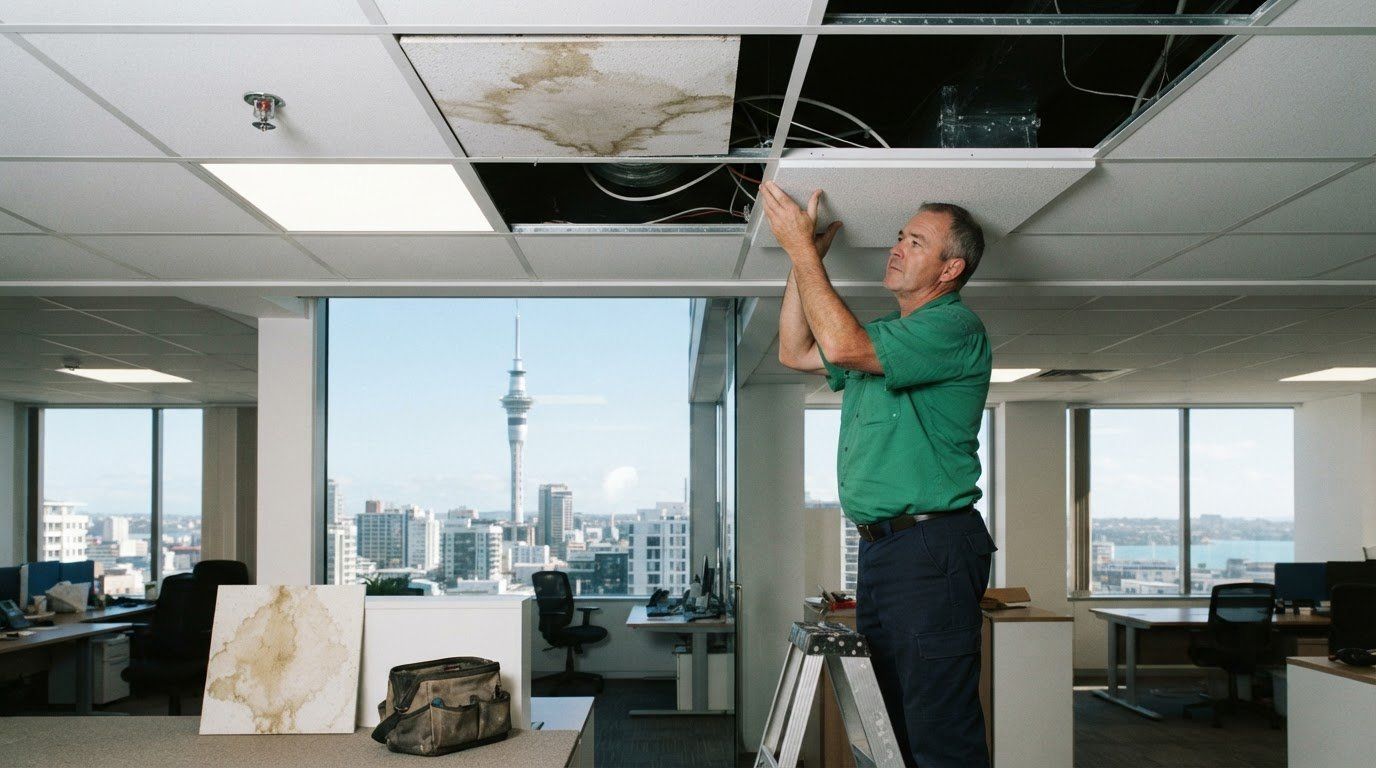
If a landlord claims damage costs, compare each item with the lease and handover records. Match end-of-lease photographs to the original condition, then separate normal wear from specific damage. Request an itemised scope and supporting evidence for each claimed repair. Respond in writing, explaining any disputed item with the relevant clause or condition record. This approach keeps a fair wear and tear assessment for an NZ commercial lease focused on evidence.
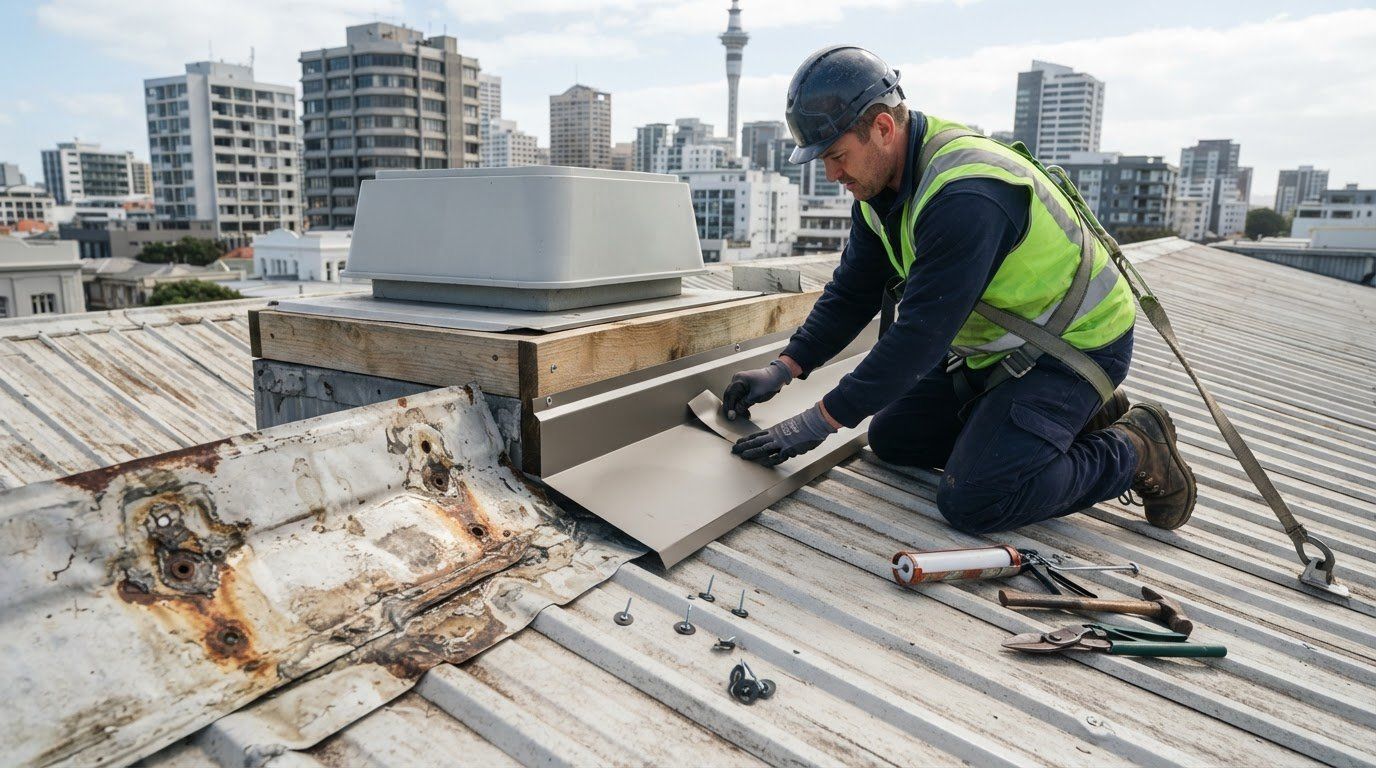
Keep any agreed resolution in writing, including which repairs or replacement costs it covers. For damage-related work, arrange the required building repairs once the parties have agreed on the scope and responsibility.
Service King Commercial: End of Lease Service
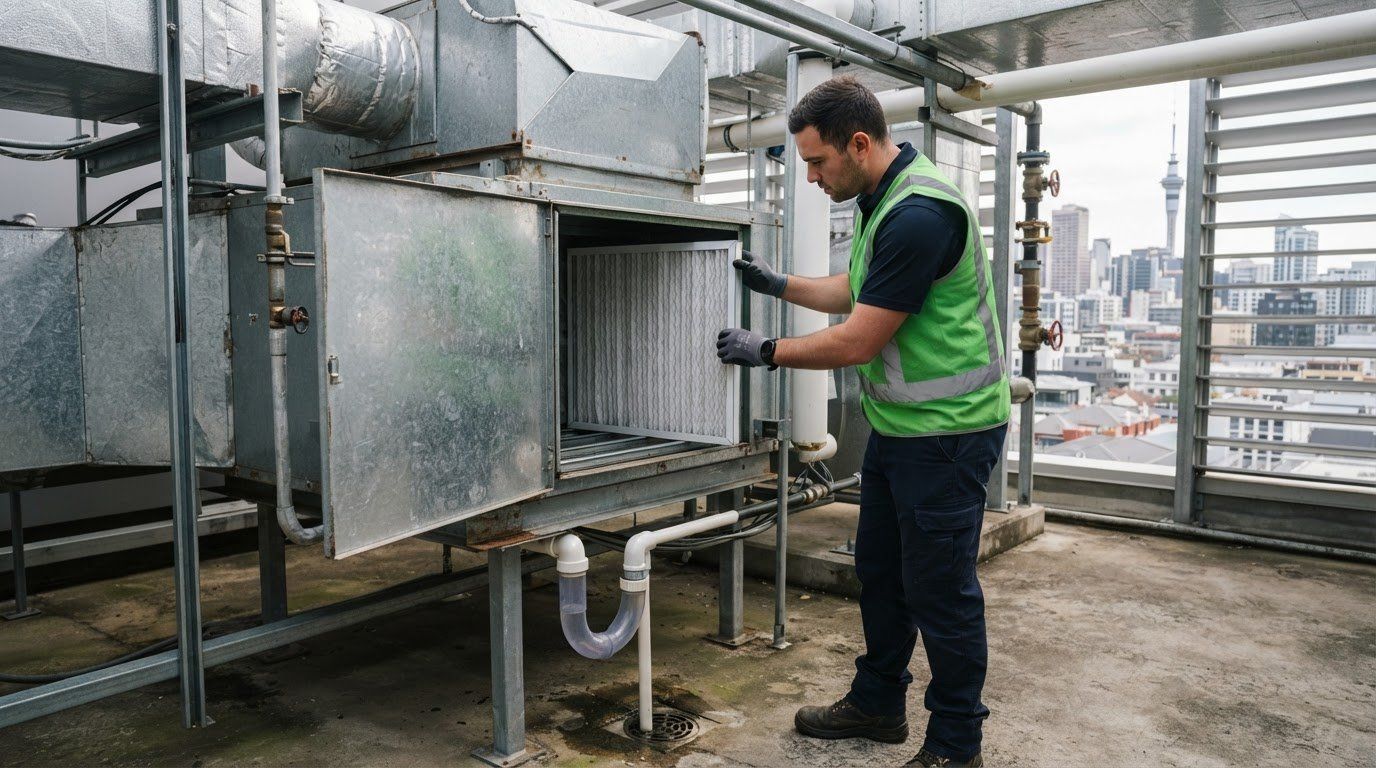
Service King Commercial provides an End of Lease Service for commercial premises approaching handover. It can help with practical work required under an agreed make-good scope, such as preparing the premises for lease-end inspection.
Use the service when reinstatement tasks need coordinating or the lease requires repairs before the premises are returned. Building Repair and Maintenance can address repair work included in the agreed scope. The lease and any settlement still determine which work is required and who is responsible for it.
Set up a clear handover plan
Before arranging end-of-lease work, turn the agreed scope into a practical handover plan. Record which tasks relate to reinstatement, which address damage and which concern the premises’ general condition. This helps keep work instructions aligned with the lease and any settlement between the parties.
A fair wear and tear commercial lease guide for NZ can clarify the key distinctions, but the next step is applying them to the actual premises. Keep decisions, agreed work and handover records together. That gives both parties a clear reference as the premises are prepared for return.
Service King Commercial’s End of Lease Service can support the physical work required for a commercial handover. Contact Service King Commercial to discuss the work involved and organise the next steps. Contact Service King Commercial to plan your end-of-lease work with confidence.
Frequently Asked Questions
Does fair wear and tear cover carpet and paint?
Yes, ordinary deterioration can be treated as fair wear and tear, depending on the lease and circumstances. A tenant’s carpet might show flattened fibres along a busy walkway, while a tear caused by moving office equipment points to damage. Paint fading with use differs from a deep gouge. Compare each claimed area with handover records and the lease wording before agreeing to replacement work.
Can a landlord claim make good in cash instead of requiring the work?
Yes, the landlord and tenant can agree to a cash settlement instead of physical reinstatement. The landlord may also claim damages for reinstatement costs where the lease and circumstances support that claim. Set out in writing which work the payment covers, the amount and whether any tasks remain. For example, a settlement might cover removing a tenant’s fitout but not separate damage elsewhere.
Is make good compulsory in New Zealand?
No general make-good duty is implied in a New Zealand commercial lease. The obligation applies when the parties expressly include it in their lease. A clause may require work at expiry or specify another trigger, such as assignment or early termination. For an Auckland tenant planning a move, the key question is whether the signed agreement includes a relevant obligation and when it requires completion.
What does make good actually mean?
Make good means carrying out the reinstatement work required by a commercial lease before returning the premises. Depending on the agreement, this can mean removing tenant-installed partitions, fittings or alterations, then repairing affected areas. For example, removing a partition may leave floor or wall damage that the scope also needs to address. The precise standard comes from the clause, not the phrase alone.
What is the landlord's and tenant's responsibility for repairs and maintenance under a NZ commercial lease?
The lease allocates repair and maintenance responsibilities between the landlord and tenant. It may address building structure, services, internal finishes, equipment or damage caused during occupation. For instance, a clause may treat a tenant’s installed equipment differently from a building component. Read the relevant repair provisions alongside any make-good clause, since responsibility during the tenancy and reinstatement at handover can be separate obligations.
What do NZ commercial lease agreements, including the ADLS lease, say about yielding up and reinstatement?
New Zealand has no prescribed commercial lease form, and the parties can agree terms suited to their premises. The ADLS and REINZ standard commercial lease template is commonly used, but the signed wording governs the tenant’s yielding-up and reinstatement duties. Read those clauses with any alterations consent or fitout schedule. A permitted installation can still have a removal requirement if the agreement expressly says so.
Recent Posts