
November 24, 2026
The maximum contribution for aged residential care covers accommodation, meals, cleaning and laundry. If you are researching aged care facility maintenance in Auckland, it helps to separate these care costs from the upkeep of the building. Premium rooms, such as those with an ensuite bathroom, and residents’ personal clothing and drycleaning are not covered.
It is understandable to want a clear breakdown before making decisions about care. Accommodation includes a room with furniture, fittings, fixtures and bedding, while the contribution also covers meals and cleaning. Knowing what falls within the contribution can make care costs easier to understand.
This article explains what accommodation, meals, cleaning and laundry cover, and which services and items sit outside the maximum contribution. It also explains how building maintenance is a separate practical responsibility for an aged care facility.
Key Takeaways
- Separate resident costs from the practical work involved in keeping an aged care building operational.
- Understand how maintenance needs can shape the work required across different parts of a facility.
- Learn what to consider when assessing inspection and maintenance schedules for an aged care home.
- See how the scope of building repairs and exterior work can affect maintenance costs in Auckland.
Table of Contents
Accommodation, meals, cleaning and laundry
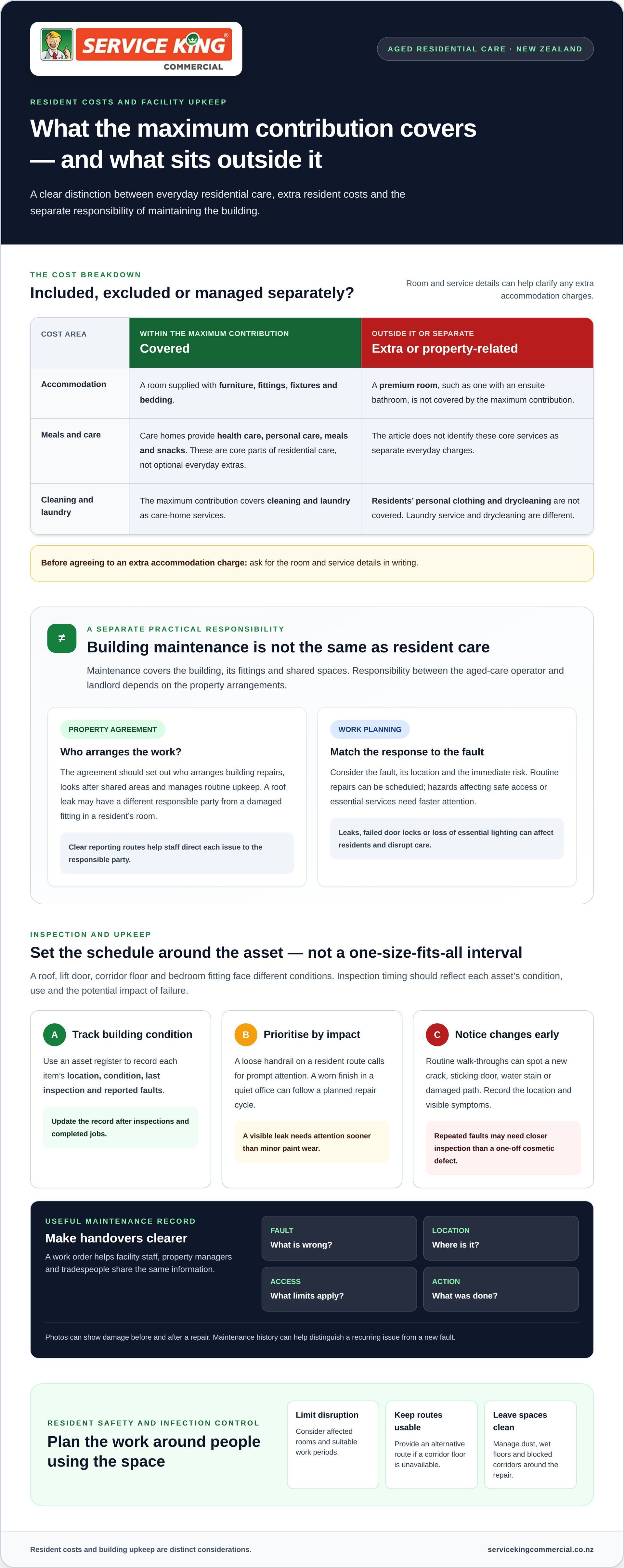
In New Zealand, the maximum contribution for aged residential care covers accommodation, meals, cleaning and laundry. A room is supplied with furniture, fittings, fixtures and bedding. Care homes also provide health care, personal care, meals and snacks. These are core parts of residential care, rather than optional extras charged as separate everyday services.
Room choice can affect what a resident pays. A premium room, such as one with an ensuite bathroom, is not covered by the maximum contribution. Personal clothing and drycleaning are also excluded. The contribution can cover laundry as a care-home service, while drycleaning a resident’s own clothes remains outside it. Ask for room and service details in writing before agreeing to extra accommodation charges.
Responsibility for maintenance between an aged care operator and landlord depends on the property arrangements. The agreement should state who arranges building repairs, looks after shared areas and manages routine upkeep. A leaking roof, for example, may fall under a different responsibility from a damaged fitting inside a resident’s room. Clear reporting routes help staff direct each issue to the responsible party.
Urgent maintenance in an Auckland care home should be reported promptly through its established operational process. A water leak, failed door lock or loss of essential lighting can affect residents and disrupt care. The response depends on the fault, its location and the immediate risk. Routine repairs can be scheduled, while hazards affecting safe access or essential services need faster attention.
Infection control and resident safety shape how maintenance work is planned. Repair dust, a wet floor after cleaning or a blocked corridor can create practical risks for residents and staff. Manage work areas to limit disruption, keep access routes usable and leave rooms clean when the task is complete. These details matter alongside the repair itself, especially in bedrooms and shared spaces.
Aged care home maintenance requirements New Zealand
Maintenance planning for an aged care home covers the building, its fittings and shared spaces. It is separate from residents’ accommodation and daily care. Work may include inspecting exterior surfaces, repairing damaged doors and addressing worn flooring. Record each task with its location, condition and priority so facility staff can track open work and completed repairs.
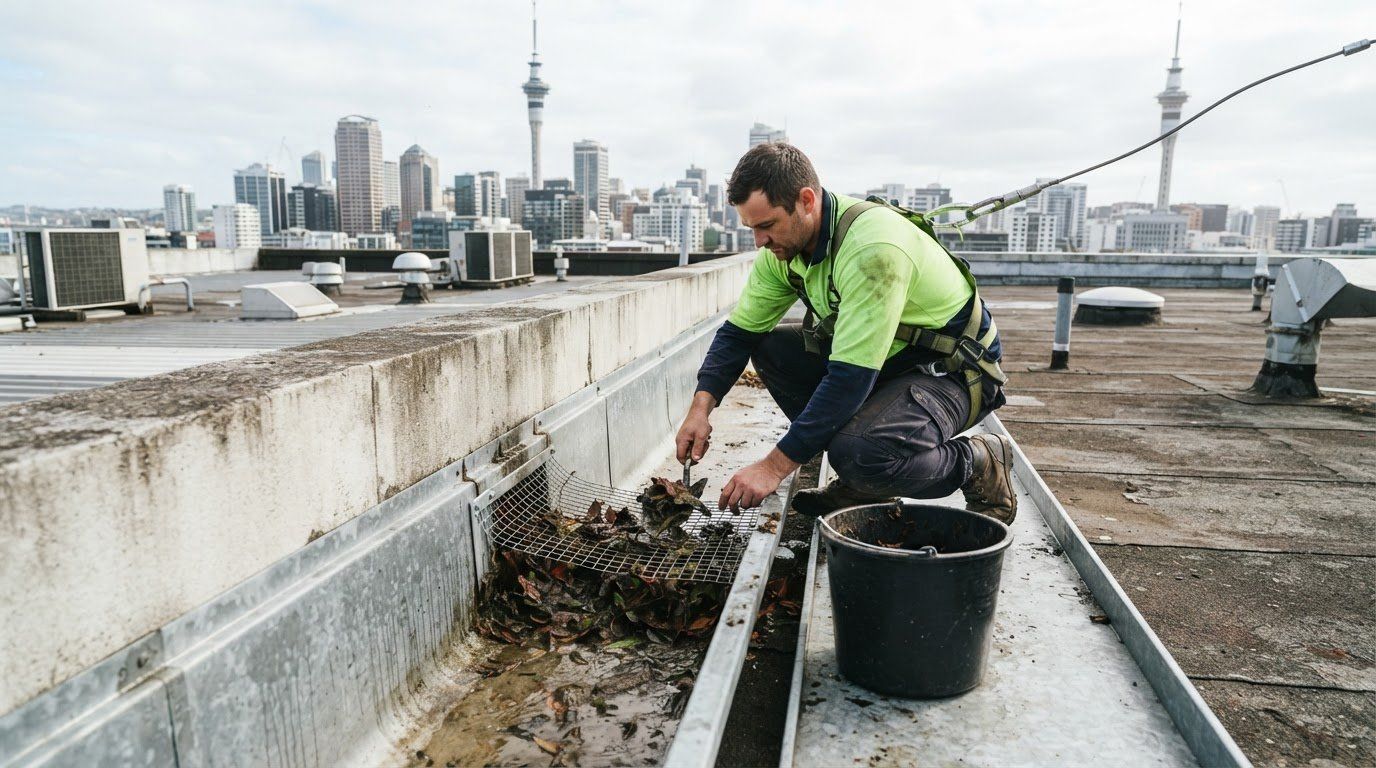
The building’s condition shapes its maintenance programme. A roof leak, cracked window or loose handrail needs a different response from a scuffed wall or stiff cupboard hinge. Exterior checks can identify deteriorating cladding, blocked drainage or damaged paths. Inside, attention may turn to doors, flooring, lighting and fixtures in bedrooms and communal areas. Structured records help staff spot recurring faults, such as repeated leaks in one room.
Plan work around how each space is used. A repair in a quiet storage area may be easier to schedule than work beside a dining room or resident bedroom. Before maintenance begins, staff can identify access needs, affected rooms and suitable work periods. For example, a corridor floor repair requires a clear alternative route while the surface is unavailable.
Clear task records also support handovers between facility staff, property managers and tradespeople. A useful work order identifies the fault, its location, any access limits and the action taken. Photos can show the damage before and after a repair. If a fitting fails again, the maintenance history helps distinguish a recurring issue from a new fault.
No single maintenance list suits every New Zealand care home. Building age, construction, resident use and previous repairs all affect the work required. A practical programme combines routine checks with reported faults, then assigns each task according to its condition and impact. This keeps attention on actual building needs rather than treating every repair alike.
Aged residential care homes in New Zealand provide health care and personal care, meals and snacks, and a room with furniture, fittings, fixtures and bedding. When choosing a care home, consider whether it provides the level of care needed and feels right for the person and their whānau.
How often must aged care facilities be inspected and maintained NZ
One inspection interval will not suit every asset. A roof, lift door, corridor floor and bedroom fitting face different conditions. Set inspection timing according to the asset’s condition, use and the potential impact of failure. A visible leak needs attention sooner than minor paint wear. This approach gives facility managers a practical schedule without treating every building component alike.
Start with an asset register covering the building’s main systems and spaces. Record each item’s location, condition, last inspection and reported faults, then group tasks by risk and work type. A loose handrail on a resident route, for example, deserves prompt attention. A worn finish in a quiet office can follow a planned repair cycle. Update the record after each inspection or completed job.
Use routine walk-throughs to spot changes between scheduled checks. Staff may notice a new crack, sticking door, water stain or damaged path during normal facility operations. Record the location and visible symptoms, then report the issue through the maintenance process. A recurring fault, such as repeated water marks below one roof section, may need closer inspection than a one-off cosmetic defect.
Review the schedule when the building changes. Renovations, increased use of a communal area or repeated repairs can alter maintenance priorities. After each repair, record the work completed and any follow-up required. This creates a useful history for future planning and helps distinguish routine upkeep from developing problems.
Urgent faults need a separate reporting route from planned inspections. A failed access door or damaged flooring on a resident route can create an immediate operational concern. Routine checks help identify developing issues, but do not replace prompt reporting when staff notice a fault. Clear responsibilities and records help the facility respond consistently.
Maintenance planning sits alongside the financial arrangements for care, which should be considered separately from the building’s condition. In New Zealand, someone who moves into aged residential care without a NASC assessment must pay the full cost themselves. Clarify assessment status and likely costs when planning a move, rather than treating facility upkeep as the only practical consideration.
Aged care facility maintenance costs Auckland
Maintenance costs in Auckland depend on the building and the work required. A small internal repair differs from replacing damaged exterior materials. The fault’s location, condition and effect on facility operations also shape the scope. A repair in a busy corridor, for example, may need careful scheduling around resident movement. A clear work description helps define the task before pricing.
Separate planned upkeep from unplanned repairs when reviewing facility expenditure. A recurring roof leak may lead to repeat call-outs if its cause remains unresolved. Recording previous work helps identify patterns and scope the next repair more accurately. Exterior wear, damaged fixtures and deteriorating paths each involve different work. The building’s condition helps determine whether a task needs repair, replacement or further assessment.
Access can affect how work is organised. A contractor may need to coordinate entry to a resident’s room, a shared area or a service space. Occupied areas may require staged work to maintain clear access and limit disruption. A repair across several locations may also need different materials or trade tasks. These details help explain why similar-looking faults can have different scopes.
For contracted maintenance, the price depends on the case and is provided after a quote request. Scope, access, materials, building condition and the work required all influence the quote. A useful cost review separates the repair itself from related work identified during assessment. Record completed tasks too, so managers can track recurring issues and plan future maintenance.
For aged care facility maintenance in Auckland, a detailed scope supports a more useful cost discussion. Describe the affected area, visible fault and access requirements. Include relevant repair history where available. This gives the contractor practical context for assessing building repair and maintenance work. Discuss your facility maintenance requirements when you need support with building repairs or exterior upkeep.
Service King Commercial
Service King Commercial provides building repairs and exterior maintenance for commercial properties, supporting facility teams with building upkeep alongside the costs and responsibilities covered in aged residential care. This work can address a damaged fitting, a worn exterior area or repair needs identified during facility inspections.
Turn to Service King Commercial when building work needs a clear scope and practical coordination. Describe the affected area, the visible issue and any access considerations. This gives the work a useful starting point and helps connect the maintenance need with the right service.
For help with building repairs or exterior maintenance, contact Service King Commercial.
Plan the next maintenance step
Use the next maintenance planning discussion to connect building work with the way the home operates. Set out which areas need attention, how access will be managed and who coordinates decisions across the property. A clear scope gives facility teams a practical basis for scheduling work without losing sight of residents’ routines.
For aged care facility maintenance in Auckland, a forward plan helps make building needs visible before they compete with daily operations. Keep the discussion focused on the work required, site conditions and task priorities. This makes it easier to involve the right people and keep decisions grounded in the facility’s needs.
When you’re ready to discuss a building maintenance requirement, contact Service King Commercial. Share a concise description of the work and affected area to start a useful conversation. A considered next step can help turn maintenance priorities into an organised work plan.
Frequently Asked Questions
What Auckland aged care facility maintenance services are available?
Service King Commercial provides building repair and maintenance, exterior building maintenance, scheduled maintenance and trade services for commercial properties. For example, a facility manager can arrange support for a damaged building fixture or exterior upkeep. Share the affected area, the issue and any site access requirements when describing the work. This helps define the maintenance scope for an Auckland care facility.
Recent Posts