
October 24, 2026
The property’s use should shape its maintenance priorities. For commercial property maintenance in East Tamaki, account for the area’s mix of light and heavy industrial activity, as well as Highbrook’s focus on offices and low-impact technology businesses in a park-like setting.
Maintenance needs to fit how each site operates, from warehouses and workshops to offices and shared grounds. A site assessment can help identify practical priorities and plan work around the people who use the property.
This article explains how consultation can shape maintenance decisions in East Tamaki, what commercial property maintenance can cover, and which factors affect planning and cost. It also looks at how maintenance work can support skills development and employment opportunities. You’ll find clear guidance on assessing your site’s needs and deciding on a practical next step.
Key Takeaways
- Match maintenance planning to how your East Tamaki site is used, from industrial operations to office spaces.
- Understand which property and work-scope factors shape maintenance costs, without relying on generic price estimates.
- Compare planned maintenance with urgent repair needs so you can set practical priorities for your building.
- Use consultation with the people who work on site to identify maintenance needs and support relevant skills and employment opportunities.
- Set inspection and preventative maintenance routines around building condition, equipment and operational demands.
Table of Contents
- Which commercial property maintenance companies serve East Tamaki?
- What are typical commercial property maintenance costs in East Tamaki?
- Do East Tamaki property maintenance providers offer planned maintenance contracts and emergency callouts?
- What building compliance and health and safety requirements apply to commercial property maintenance in New Zealand
- How often should commercial buildings schedule inspections and preventative maintenance
- Service King Commercial: Commercial Cleaning Services
Which commercial property maintenance companies serve East Tamaki?
Businesses seeking commercial property maintenance in East Tamaki should match the work to the building and task. The local market includes industrial sites, warehouses and offices. Exterior maintenance may suit a different job from a trade service repairing a building component. Start by defining the affected areas, work required and any operating constraints.
Property scale and use help clarify the scope. An industrial facility at 121 Harris Road is advertised at 2,250 square metres, whilst a modern office at 62 Highbrook Drive is advertised at 305 square metres. A warehouse and office property at 11/40 Andromeda Crescent has an advertised area of 142 square metres. Each example presents different areas and operational needs to consider.
East Tāmaki includes light and heavy industrial zones that support a range of activities and employment. Highbrook’s policies focus on low-impact technology businesses and offices in a low-intensity, park-like environment. These settings influence practical priorities, such as managing access around active work areas and maintaining shared outdoor spaces.
For commercial property maintenance in East Tamaki, define the job before planning the work. Separate a repair to a loading-area door from routine exterior maintenance. An office manager may prioritise shared entrances and building repairs. A clear scope helps identify whether the work calls for a particular trade or several maintenance tasks.
- Building repair contractors address faults such as damaged doors, fittings or building components.
- Exterior maintenance specialists look after outside surfaces and areas exposed to weather and site use.
- Scheduled maintenance providers organise recurring tasks around the building’s condition and operations.
- Trade contractors carry out defined technical work requiring a particular trade skill.
Consult the people who use and manage the property before setting priorities. The East Tāmaki Business Precinct Plan was adopted in December 2012, following consultation on its draft throughout June 2012. For a specific site, staff and property managers can identify access needs, recurring faults and work that disrupts daily operations.
Start with a site list. Describe each issue, its location and its effect on operations. Include the building type and any access constraints. For example, note whether a repair affects a loading area or a shared office entrance. These details help establish a focused scope for the work.
What are typical commercial property maintenance costs in East Tamaki?
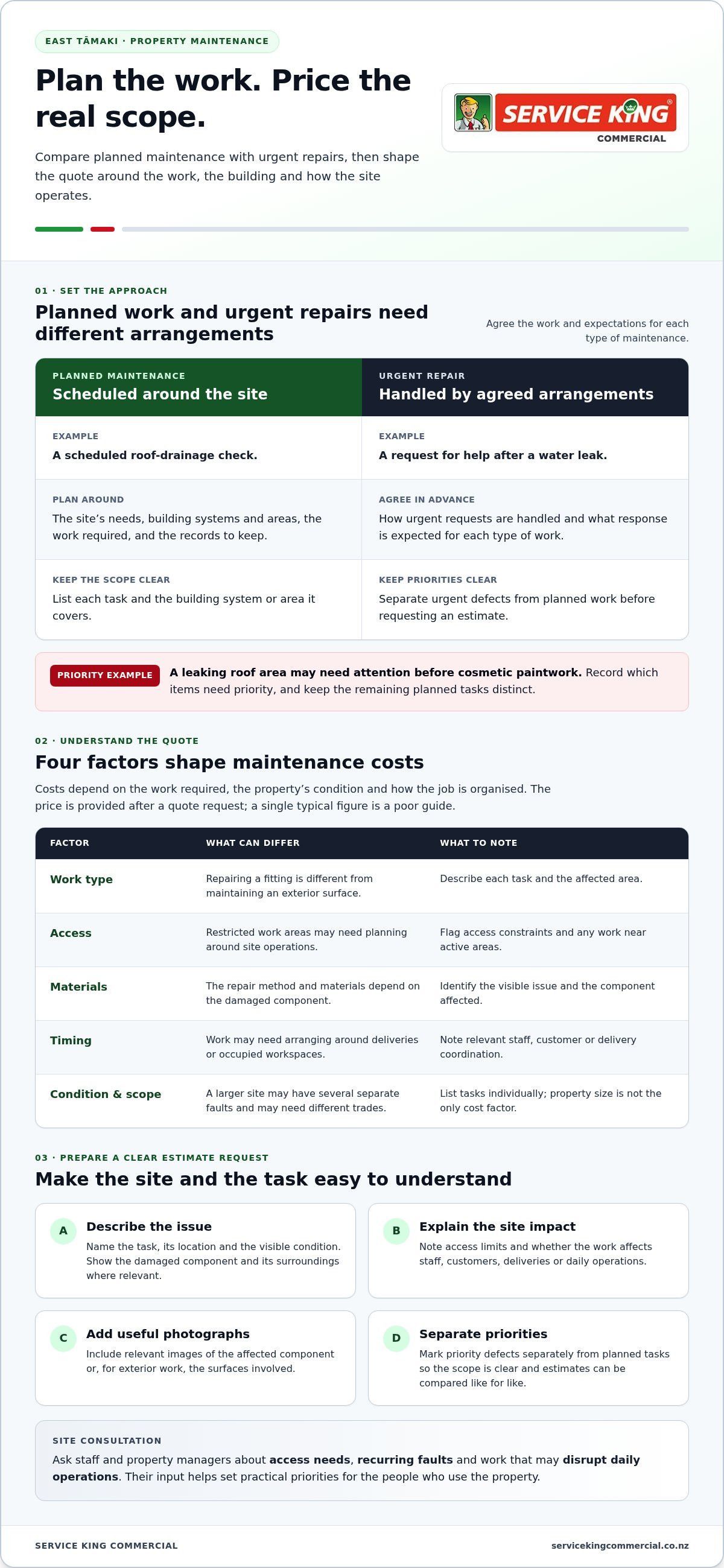
Maintenance costs depend on the work required, the property’s condition and how the job is organised. A minor door repair differs from repainting several exterior surfaces. A warehouse with active loading areas also needs different access planning from an office with shared entrances. A single typical figure is therefore a poor guide for budgeting.
The price depends on the work and is provided after a quote request. Key cost factors include the scope, site access, materials, labour and timing. Describe each task clearly, including the affected area, visible issue and whether work needs to be coordinated around staff, customers or deliveries.
Property size can affect the amount of work, but it is not the only cost factor. The building’s condition matters too. A small damaged area may need a limited repair, while a larger site may have several separate faults requiring different trades. List tasks individually so the scope reflects the work itself, not just the floor area.
- Work type: repairing a fitting differs from maintaining an exterior surface.
- Access: restricted work areas may need additional planning around site operations.
- Materials: the repair method and materials depend on the damaged component.
- Timing: scheduling around deliveries or occupied workspaces can affect how tasks are arranged.
Separate priority defects from planned work before requesting an estimate. A leaking roof area, for example, may need attention before cosmetic paintwork. Grouping related tasks can also make the scope easier to review. Record each issue’s location, condition and operational effect, then note which items need priority.
Use a simple estimate checklist: describe the task, identify the site area, note access constraints and include relevant photographs. For a repair, show the damaged component and its surroundings. For exterior work, identify the surfaces involved. These details clarify the expected scope and make estimates easier to compare on a like-for-like basis.
Allow for follow-up work in the maintenance budget. An inspection may reveal a related defect, such as water damage beside a failed seal. Keep that possibility separate from the original task until the scope is clear. For a structured outline of commercial building maintenance, set out the tasks and site conditions before requesting a quote.
Do East Tamaki property maintenance providers offer planned maintenance contracts and emergency callouts?
Planned maintenance can be arranged through a schedule tailored to the site, while urgent requests should be handled through clearly agreed arrangements. A scheduled roof-drainage check is different from a request for help after a water leak. Set out the tasks and response expectations for each type of work.
For a planned programme, list each building system or area, the work required and the records to keep. A commercial site, for example, might schedule checks of exterior cladding, drainage, doors and shared access areas. The schedule should reflect the building’s condition, operational needs and recurring faults.
Set out planned work clearly
Write the maintenance scope so site managers can track completed tasks. Identify locations, inspection points and how follow-up work will be handled. If an inspection finds a damaged seal, record its location and condition before arranging a repair. This separates routine checks from additional work and supports clear handovers.
Agree how the schedule will be reviewed. A building alteration, new equipment or change in site use can make earlier priorities less relevant. For example, adding machinery may change access routes and maintenance needs. Update the task list when site conditions change, and keep dated service records together for easy reference.
Define emergency callout terms
Emergency response is not automatic simply because a planned maintenance arrangement exists. State separately whether urgent callouts are included, what counts as an emergency and how requests are received. A burst pipe affecting occupied areas differs from a non-urgent fault that can wait for the next scheduled visit.
Set out practical details in writing: the contact route, information needed to report a fault, the response process and how additional work is approved. Avoid vague wording such as “urgent support” without defining it. An example, such as loss of access to a main entrance, can help staff classify incidents consistently.
- Planned tasks: name the asset or area, work and schedule review process.
- Emergency scope: define urgent faults and the steps for reporting them.
- Work records: note completed tasks, findings and required follow-up.
- Approval process: establish who authorises work beyond the agreed scope.
Before agreeing a schedule, compare it with the site’s actual needs. Map recurring tasks against operating hours and access restrictions. Keep planned work, urgent-request arrangements and additional repair approvals in separate, readable sections. This makes responsibilities easier to understand during routine visits and unexpected faults.
Service King Commercial helps businesses manage callouts and follow-up records together, while keeping the approval trail clear when a fault leads to additional work. This helps site staff distinguish an agreed visit from a request that needs separate authorisation. East Tāmaki contributes 4.5% of the Auckland region's total employment. For providers and property managers serving commercial sites, written terms can help match service arrangements to operating needs without implying every issue is covered. Before relying on a contract, confirm that the named contact route works for the people on site, that staff know what information to provide, and that records can be reviewed after each visit. Revisit the arrangement if the agreed scope no longer reflects site priorities or access requirements.
What building compliance and health and safety requirements apply to commercial property maintenance in New Zealand
For a New Zealand commercial property, compliance planning starts with the building’s records and the proposed work. Identify the affected area, relevant building systems and existing inspection documents. A damaged-door repair differs from work that changes a wall or fire system. Record the scope before work begins, then identify any approvals or specialist input required.
Building owners and property managers should keep relevant documents accessible. These may include maintenance records, inspection reports, product information and plans showing services. For example, a trade worker near electrical equipment needs to understand its location and the access arrangements. Use current site information, not an old floor plan that omits later changes.
Workplace safety planning should start with the task and its hazards. A roof inspection, a repair near vehicle movements and work inside an occupied office each need different controls. Before work starts, identify who uses the area, how access will be managed and what could expose workers or occupants to harm. Explain the arrangements to everyone affected.
- Access: define entry points, restricted areas and any separation from staff or visitors.
- Work at height: identify the work location and safe access method before exterior repairs.
- Plant and vehicles: plan around forklifts, delivery routes and loading activity.
- Hazardous materials: review available building records before drilling, cutting or removing materials.
- Emergency arrangements: show workers how to raise an alarm and leave the work area safely.
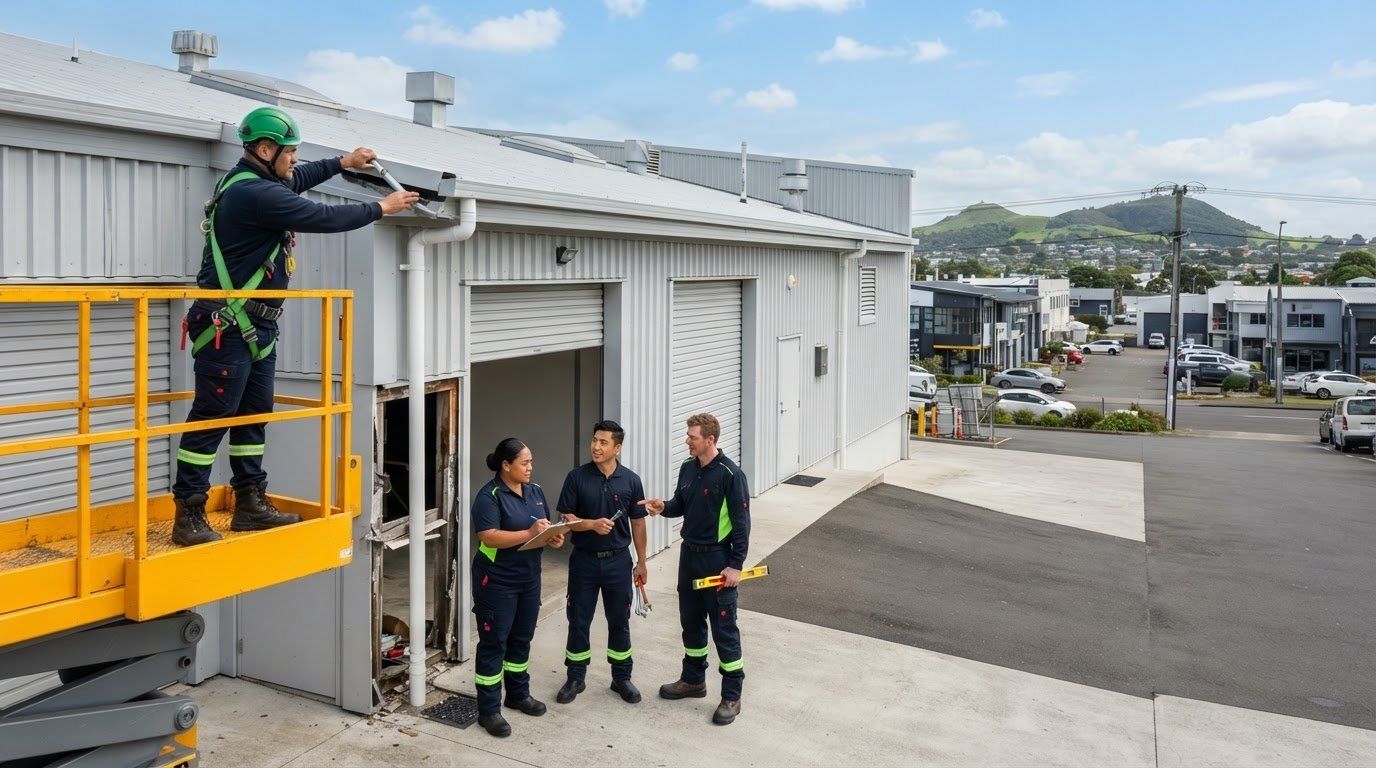
In an East Tamaki warehouse, maintenance beside an active loading bay needs clear separation from vehicle movements. In an office, repair work near a shared entrance may require a managed pedestrian route. Mark the work area, brief affected staff and maintain the access arrangements throughout the task.
Some work may affect systems or features with separate building compliance records. Check the property file and identify the relevant system before changing or repairing it. If work could alter a building component or its function, establish the appropriate approval pathway before proceeding. Keep the decision and supporting documents with the job record.
Close each job with a practical handover. Record the work completed, any defects found and follow-up actions. Attach relevant instructions or inspection results, then update the property maintenance file. This gives the next property manager or maintenance worker a clear record and helps guide future planning.
How often should commercial buildings schedule inspections and preventative maintenance
There is no single inspection interval for every commercial building. Set the frequency by considering the property’s condition, building systems, site activity and the consequences of failure. A busy warehouse with vehicle movements needs different checks from a lightly used office. Use manufacturer guidance, building records and observed wear to set a practical schedule.
Start with a site walk-through and a list of assets or areas to inspect. Include roofs, gutters, doors, drainage, exterior surfaces and shared access routes. For each item, note its condition, visible defects and the effect of failure. A recurring blocked drain, for example, may need closer monitoring than an undamaged wall finish.
Use different triggers for routine inspections and event-based checks. Routine checks follow a calendar or maintenance plan. Event-based checks follow a change or incident, such as severe weather, a leak, impact damage or building work. If a delivery vehicle damages a loading-bay door, inspect the door and surrounding structure before treating it as a routine repair.
- Building condition: inspect visibly worn or previously repaired areas more closely.
- Operational activity: consider traffic, equipment use and access needs.
- Weather exposure: review roofs, drainage and exterior finishes after damaging conditions.
- Fault history: use repeat defects to adjust inspection priorities.
- Work records: document findings, actions and the next review point.
Preventive maintenance should follow inspection findings, not just a fixed calendar. Clear gutters when debris or drainage issues show a need. Repair a loose door fitting before it affects access or causes further damage. Record the reason for each task, who completed it and whether follow-up is outstanding.
Review the schedule when the building or its use changes. New equipment can affect access and building services. A tenant change can reveal different wear patterns in shared areas. Compare inspection records with reported faults, then bring checks forward when the same issue keeps recurring. Keep the schedule practical, with named areas and clear actions.
To organise a workable programme, group tasks by location and operating impact. Separate routine checks from specialist inspections and urgent repairs. Set responsibilities for logging defects and approving follow-up work. A clear scheduled maintenance plan can help structure recurring building tasks around site needs.
Service King Commercial: Commercial Cleaning Services
Service King Commercial can help East Tamaki businesses with building repair and maintenance, exterior building maintenance and scheduled maintenance. Turn to the team when a building fault needs attention, exterior upkeep is due or recurring tasks need a clear plan.
For a repair, identify the damaged building component, note its location and describe its effect on site operations. For planned work, list the areas and tasks that need attention. Clear details help shape a practical scope around your property’s needs.
End-of-lease services are also available when a commercial tenancy is ending and the property needs attention before handover. Choose the relevant work based on the property’s needs, whether that involves repairs, exterior upkeep or preparing a space for lease transition.
Contact Service King Commercial to discuss maintenance needs for your East Tamaki property.
Set your next maintenance priority
Choose a practical next step for your East Tamaki property: turn recent site observations into a short, prioritised work list. Record the affected area, the issue and its effect on daily operations. This gives property managers a clear basis for assigning work and tracking decisions.
For commercial property maintenance in East Tamaki, Service King can help with exterior building maintenance, building repair and maintenance, and end-of-lease work. These services suit businesses addressing a specific repair, planning exterior upkeep or preparing a property for handover. Match the work to the property’s needs and keep the agreed scope clear.
Start with the task that affects site use or building condition most. Then set out the relevant details and discuss the work required. Contact Service King Commercial today to discuss maintenance for your property. A clear first step can help you move forward with a workable plan.
Frequently Asked Questions
What commercial property maintenance services are available in East Tamaki, Auckland?
East Tamaki businesses can arrange building repairs, exterior upkeep, scheduled maintenance, trade services and end-of-lease work with Service King. The company serves commercial properties across Auckland. A property manager preparing a tenancy handover can arrange end-of-lease work, while a building owner can address exterior maintenance or a damaged component. Match the service to the task, whether it is a repair, upkeep or tenancy transition.
What maintenance risks are common for East Tamaki commercial and industrial properties?
Common issues include damaged doors, fittings and other building components; weather-exposed exterior surfaces; and roof drainage faults, leaks and failed seals that can lead to water damage. Active loading areas and shared entrances can also make access and routine work harder to manage.
How do East Tamaki commercial maintenance providers compare on services, response times, and reviews?
Providers may specialise in building repairs, exterior maintenance, scheduled work or specific trades, so compare them against the tasks your site needs. Set emergency response expectations and reporting terms explicitly; the material provides no provider reviews or response-time comparisons.
Recent Posts