
October 23, 2026
A maintenance delay can disrupt work before a fault becomes a major repair. For industrial building maintenance in Penrose, priority depends on the impact on people, operations and the building, as well as the repair scope and access required. Clear details help determine what needs attention first.
It’s reasonable to want clarity on urgency and cost before arranging work. This guide explains what building maintenance can cover, what to include in an urgent enquiry and how planned preventative maintenance helps organise repairs before they interrupt operations.
Costs depend on the building, repair scope, access, materials and work required. A quote based on the specific job helps you understand what is included. You’ll also learn how to distinguish urgent repairs from planned work and what to expect from a maintenance programme, so you can choose a practical next step for your Penrose property.
Key Takeaways
- Separate urgent faults from routine repairs by describing their impact on safety, building use and day-to-day operations.
- Use a clear maintenance scope to identify the building areas, systems and repair work that need attention.
- Make an enquiry more useful by outlining the fault, its location, access requirements and any effect on operations.
- Expect pricing to depend on the building and job scope, including access, materials and the work required.
- Use planned preventative maintenance to organise inspections and address developing issues before they disrupt building operations.
Table of Contents
Building repairs and maintenance
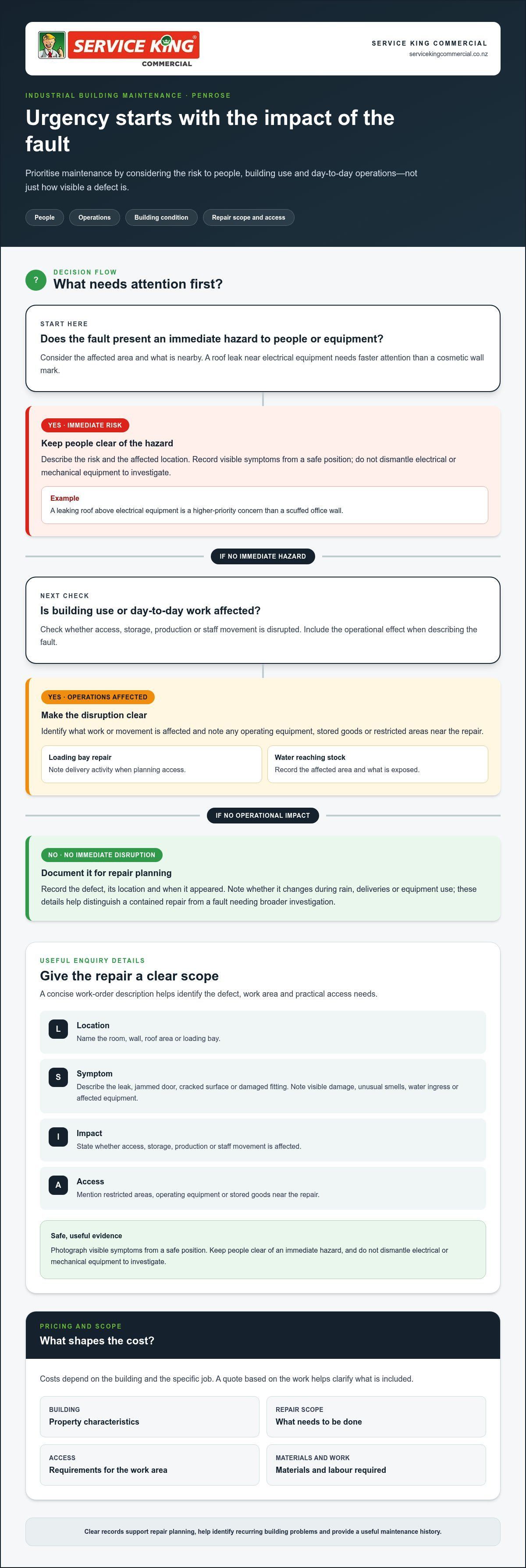
Industrial repairs range from damaged doors to failing roof drainage. Start by recording the fault, its location and its effect on work. A leaking roof above stored stock needs different attention from a scuffed office wall. Note visible damage, unusual smells, water ingress or affected equipment. Keep people clear of any area presenting an immediate hazard. These details help define the repair and work area.
Separate the immediate fault from related damage. A door that will not close may involve its frame, hinges or access hardware. A damp patch might point to a roof leak, blocked gutter or pipework issue. Photograph visible symptoms from a safe position. Record when the fault appeared and whether it changes during rain, deliveries or equipment use. Do not dismantle electrical or mechanical equipment to investigate.
For Auckland Council requirements, the applicable consent pathway depends on the proposed work. A like-for-like repair differs from an alteration affecting structure, fire separation or building use. Describe the scope and affected building elements to Auckland Council, then establish applicable consent requirements before alteration work starts. Keep the approved scope and related records with the job information.
Roof, gutter and drainage maintenance in Penrose can include checking for loose roof materials, blocked outlets, damaged downpipes and signs of water entry. For example, note whether a ceiling stain appears below a roof junction or beside a downpipe. Keep access routes clear and arrange inspection from a safe position. Record the affected area and any water reaching stock, walkways or electrical equipment.
Organise repairs by documenting each defect and its operational effect. Useful work-order details include:
- Location: identify the room, wall, roof area or loading bay.
- Symptom: describe the leak, jammed door, cracked surface or damaged fitting.
- Impact: state whether access, storage, production or staff movement is affected.
- Access: note restricted areas, operating equipment or stored goods near the repair.
These records help distinguish a contained repair from a fault needing broader investigation. Repeated water entry, for example, may require attention to the roof covering and drainage route, not just internal staining. After the repair, record what was completed and any remaining defect. This creates a useful maintenance history for future inspections and helps teams identify recurring building problems.
Commercial and industrial property maintenance coverage
In New Zealand, compliance needs depend on the work, building use and affected systems. Separate routine upkeep from proposed alterations, then identify whether consent, inspection or specialist sign-off applies before work proceeds.
A useful maintenance scope starts with the building’s main operating areas. Map production floors, offices, staff facilities, loading zones and storage spaces, then record the assets serving each area. A warehouse, for example, may have roller doors, ventilation equipment, floor markings and staff amenities. A small office on the same site may have different fixtures and access needs. This inventory helps organise work by function, not just by room.
Consider the building envelope alongside its internal spaces. Exterior cladding, windows, entry doors and seals affect how well the building withstands daily use and weather. Inside, inspect walls, ceilings, flooring, fittings and shared access routes. A damaged floor joint beside a forklift route needs a different work plan from a chipped wall in a meeting room. Record each defect by location and nearby activity.
Building services also need clear boundaries in a maintenance schedule. Note heating, ventilation, lighting, plumbing and electrical assets by area. A ventilation issue in a production space, for example, can affect comfort and work conditions, whilst a leaking staff-room tap affects another part of site operations. Identify the system, symptom and affected area. Keep service records with relevant asset information for future planning.
Use a coverage checklist to prevent gaps between areas and asset types:
- External areas: record cladding, windows, doors, paths and site access points.
- Work areas: include floors, walls, ceilings, fixtures and equipment clearances.
- Shared spaces: cover reception areas, staff rooms, toilets and corridors.
- Building systems: list lighting, ventilation, plumbing and electrical assets.
- Site operations: note delivery routes, restricted zones and operating equipment.
Next, assign each item a condition and practical action. A loose door handle may need adjustment; recurring condensation could call for investigation of ventilation or building use. Group related defects where they share access needs or affect the same work area. This can help plan a visit efficiently and reduce repeated disruption. Update the record after work, noting the completed task and any follow-up required.
For a Penrose industrial site, operating hours, stock placement and vehicle movements shape access planning. Mark the work zone, identify nearby activity and arrange a suitable sequence. Repairs beside a loading bay, for instance, may need coordination with deliveries. A detailed coverage plan gives managers a clearer view of building condition, outstanding repairs and maintenance priorities.
Maintenance enquiries, urgency, and pricing
For industrial maintenance in Auckland, urgency depends on the hazard and operational impact. A roof leak near electrical equipment needs faster attention than a cosmetic wall mark. Explain the immediate risk, affected area and work disruption when making an urgent enquiry. This helps establish the priority and response needed.
For an urgent repair near Penrose, describe the fault clearly when contacting Service King Commercial. Share the site address, exact location, visible damage and any immediate risk. If water is entering a production area, say whether stock, machinery or access routes are affected. Keep people away from unsafe areas and follow your site’s emergency procedures.
Costs are scoped per building and per job, rather than set at one standard rate. A per-square-metre figure can miss key differences between a simple repair and a fault needing investigation, specialist trades or restricted access. Describe the actual work and property conditions when requesting a quote.
Cost depends on the repair scope, building layout, access, materials and work required. Replacing a damaged fitting in an accessible room, for example, differs from tracing water ingress above stored goods. The fault’s location, safe access and any related damage can change the work plan. A clear scope connects the quote to the job, rather than an area-only estimate.
Include practical details in your first enquiry. A concise report can cover:
- Site: give the Penrose address and the best entry point.
- Fault: describe what has failed and when it was noticed.
- Impact: state whether staff, stock, equipment or operations are affected.
- Access: note operating hours, restricted areas and nearby activity.
- Evidence: attach clear photographs taken from a safe position.
Separate immediate containment from permanent repair. For a leaking pipe, for example, explain whether the water has been isolated and which rooms remain affected. Do not dismantle equipment or enter unsafe areas to gather details. Accurate information helps the repair team understand the work before arranging access.
Ask for the proposed scope to distinguish investigation, repair and any follow-up work. Check that it identifies the affected building area, materials and access needs. If new damage appears during the job, record the change and its cause before agreeing to added work. This keeps the maintenance record useful and the final invoice connected to the work completed.
Industrial building maintenance in Auckland is scoped per building and job, not at a standard rate per square metre. Costs depend on the repair scope, layout, access, materials and work required, so request a quote based on the specific fault and property conditions.
Treat an enquiry as a request for a job-specific assessment, not a lookup of a fixed tariff. Keep details consistent if you need clarification: describe the affected area, access conditions and repair scope, then ask which work the proposed price covers. This helps align the estimate with the agreed repair and the work recorded afterwards.
Planned preventative maintenance programmes
A planned programme turns building inspections into scheduled tasks, records and repair priorities. According to Access, planned preventative maintenance is the maintenance programme most commercial property managers run.
Inspection and maintenance frequency
There is no single inspection interval suited to every industrial building. Set the schedule for each asset, considering its condition, use, operating environment and maintenance guidance. A heavily used loading door, for example, may need closer attention than a rarely used store-room fitting. Review the plan when equipment changes, faults recur or site operations shift.
Build the calendar around specific assets and observable checks. A roof inspection can record damaged materials, blocked outlets and water entry. A door check can cover movement, closing and visible wear. Assign each task an owner and record findings, actions and completion. This makes the next inspection easier to plan and helps teams spot recurring defects.
Deferred maintenance risks and prevention
Delaying a small repair can allow damage to spread. A minor roof leak, for example, may affect insulation, internal finishes or stored goods if water continues to enter. A sticking loading door can also disrupt deliveries and create access problems. Record defects promptly, assess their operational impact and assign a priority before they become larger work items.
Prevent avoidable delays by keeping an active defect register. Include the asset, location, observed condition, assigned action and progress. Review open items during maintenance planning, then schedule work around access and site activity. If a defect worsens, update its priority and record the change. This gives the property team a clear route from inspection finding to completed repair.
A practical programme links inspections, records and planned work. Use these steps to set one up:
- List assets: group building elements and equipment by location and function.
- Set checks: define what each inspection must observe, such as leaks or wear.
- Assign responsibility: name the person who records findings and tracks actions.
- Review records: compare current observations with previous defects and completed repairs.
Use inspection results to adjust the schedule. If a drainage outlet repeatedly blocks, add a targeted check to that asset’s plan. If a repair resolves the issue, record the work and monitor the next inspection result. This evidence helps distinguish an isolated fault from a pattern requiring a broader maintenance response.
For a Penrose site, coordinate planned tasks with production, deliveries and restricted areas. A maintenance calendar should show the asset, task, access needs and operational contact. Review it after changes to building use or equipment. This keeps inspections relevant to the property’s actual condition and helps managers decide which work needs attention first.
Industrial building maintenance companies in Penrose Auckland
Choosing a maintenance company starts with matching the work to the building. A Penrose warehouse may need roof repairs, loading-door work and recurring inspections. An industrial unit with offices may also need attention to shared corridors and staff areas. Define the required outcomes before comparing proposed scopes.
Check how the work will be described and organised. A useful scope identifies the affected area, the fault, access needs and intended repair. “Repair leak”, for example, gives little detail. “Trace water entry above the eastern loading bay and repair the affected roof area” sets a clearer job boundary. Specific descriptions also help property managers compare proposals consistently.
Consider how repairs fit around site activity. Work beside a loading bay may need to be coordinated with deliveries. Repairs near production equipment may require an agreed work zone and a named site contact. Explain restricted areas, vehicle movements and operating conditions during the enquiry. These details help shape a practical sequence for inspection and repair.
Ask how the maintenance record will support future decisions. After a roof repair, for instance, the property team needs a record of the affected area, work completed and any follow-up task. Consistent records help identify recurring faults across visits. They also give managers a clearer basis for planning related work instead of treating each defect in isolation.
Compare proposals against the same practical points:
- Scope: identify the building areas and tasks covered.
- Access: state how site entry, work zones and operating activity are handled.
- Work records: clarify how findings and completed repairs are documented.
- Follow-up: show how outstanding defects are carried into future planning.
- Pricing basis: relate the quote to the building and job scope.
For industrial building maintenance in Penrose, a clearly scoped quote is more useful than an area-only comparison. Building size alone does not show whether a job involves straightforward access, multiple affected areas or investigation before repair. Compare the stated work, materials and access requirements alongside the price. This keeps differences visible and helps prevent assumptions about what each proposal covers.
Choose a maintenance arrangement that fits the site’s needs. A single repair may suit an isolated defect, whilst recurring issues can call for scheduled inspections and planned work. Repeated door faults, for example, may justify reviewing the door’s condition and use rather than ordering identical repairs each time. Match the scope to the pattern of faults, building activities and access demands.
Before work begins, agree the site contact, access arrangements and work boundaries. Record any changes if an inspection reveals related damage. A clear handover gives the property team a practical record of completed repairs and remaining actions.
Service King Commercial: Commercial Cleaning Services
Service King Commercial provides building repairs, exterior maintenance and end-of-lease work for industrial properties. Use building repair and maintenance for faults affecting the building, or exterior building maintenance for issues outside the property. End of Lease Service can support the work required when a commercial tenancy is ending.
Before making an enquiry, describe the site, affected area and work needed, including any access restrictions or operational impacts. This gives the maintenance scope a practical starting point. For recurring building needs, outline the issues that return and the areas needing attention. Service King Commercial’s maintenance services can help address these requirements.
Contact Service King Commercial to discuss the work required for your property.
Set your next maintenance priority
Use the next maintenance planning cycle to connect building condition with operational priorities. A recurring fault may point to a wider issue, whilst a one-off defect may need a focused repair. For industrial building maintenance in Penrose, clear records of decisions help teams carry work forward as site needs change.
Service King Commercial provides building repair and maintenance, exterior building maintenance and End of Lease Service. These services support property teams addressing building defects, exterior work or tenancy handover tasks. Set out the work area and intended outcome when arranging the next step.
Build the scope around the property’s current needs, then organise the work accordingly. Contact Service King Commercial today to discuss your building maintenance requirements. A clear starting point can help you move towards a workable plan for your site.
Frequently Asked Questions
How fast do you respond?
Service King Commercial prioritises quick responses, with urgency shaped by the fault’s effect on site operations. A damaged entrance affecting deliveries needs different attention from a minor defect in an unused room. State whether access, equipment, stock or staff activity is affected. Include the site address and a clear description so the enquiry can be directed appropriately. No specific response time is promised here.
Planned or reactive maintenance: which do I need?
Use scheduled maintenance for recurring inspections and known upkeep tasks; use building repair and maintenance when a fault appears. A site with repeated door or drainage problems may benefit from scheduled checks alongside repair work. A sudden failure still needs a prompt repair. Service King Commercial offers scheduled maintenance and building repair and maintenance to help property teams address planned upkeep and reported defects.
What does commercial property maintenance include?
Commercial property maintenance can include repairing building elements, maintaining exterior surfaces and addressing defects that affect how a site functions. A damaged window seal, loose handrail or worn entry door, for example, may need attention. The scope depends on the affected part of the property and the work required. Keep records of completed work, especially where a recurring fault affects a tenancy or shared area.
Which regions do you cover?
Service King Commercial serves Auckland, including Penrose and surrounding commercial areas. Its Auckland coverage includes North Shore locations such as Takapuna and Albany, West Auckland areas including Henderson and Avondale, and South Auckland locations such as Manukau City and Wiri. Central Auckland coverage includes Penrose, Ellerslie and Mt Wellington. Give the property’s suburb and site address when making an enquiry.
What services are included in industrial building maintenance in Penrose?
Services relevant to industrial properties include building repair and maintenance, exterior building maintenance, scheduled maintenance and trade services. The right scope depends on the work required. An isolated damaged fixture, for example, may call for a repair, whilst a recurring exterior defect could need planned attention. Describe the property area and issue so the required work can be clearly identified.
Recent Posts