
November 16, 2026
A suspended ceiling is more than a finished surface: it can provide access to services above it. For suspended ceiling repair in Auckland, the right approach depends on the ceiling system, the damaged area and what needs to remain accessible. According to the European Commission, tiles in modular suspended ceilings sit in a grid without permanent mechanical fixtures and can be pushed up to access the ceiling cavity.
That access matters when repairs involve wiring, ducting or pipework, especially in commercial and specialist spaces where ceiling work needs to fit around building operations. Damage still needs attention: loose, stained or broken tiles can affect the finish and make access less straightforward.
This article explains how suspended ceiling repairs can support access to services, what a repair may involve and which details shape the work. It also covers practical considerations for commercial spaces, from identifying the affected ceiling area to planning around the services above it. You’ll get a clear picture of when repair is suitable and how to proceed.
Key Takeaways
- See how modular ceiling tiles can provide access to wiring, ducting and pipework during repair work.
- Understand which parts of the repair scope and ceiling condition can affect a quote.
- Learn why a square-metre rate may not reflect the full work needed for a localised tile or grid repair.
- Find out how professional assessment can distinguish a sagging tile from a problem with the supporting grid.
Table of Contents
Access to wiring, ducting and pipework
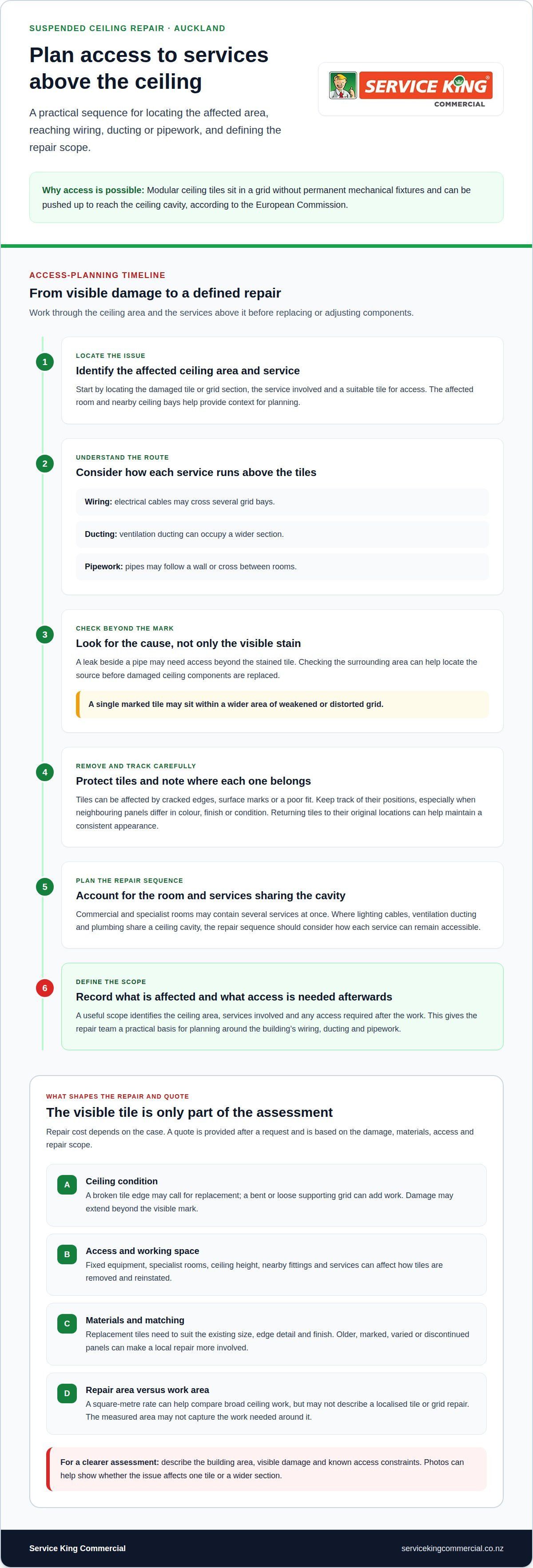
Modular suspended ceilings provide practical access to services above the tiles. According to the European Commission, tiles sit in a grid without permanent mechanical fixtures and can be pushed up to reach the ceiling cavity. For suspended ceiling repair in Auckland, access planning starts by locating the affected service and identifying a suitable tile.
A technician considers the ceiling layout, service position and repair area. A leak beside a pipe, for example, may require access beyond the stained tile. This can help locate the source before damaged ceiling components are replaced. The affected room and nearby ceiling bays provide useful context for planning the work.
Wiring, ducting and pipework each need a different access approach. Electrical cables may cross several grid bays, while ducting can occupy a wider section. Pipework may follow a wall or cross between rooms. The service location helps determine which tiles need to move and whether access should remain available afterwards.
Removed tiles need careful handling. Cracked edges, surface marks or a poor fit can affect the finished ceiling. A technician tracks each tile’s position, especially where adjacent panels differ in colour, finish or condition. Returning tiles to their original locations can help maintain a consistent appearance.
Commercial and specialist rooms can contain several services in one ceiling cavity. A room with lighting cables, ventilation ducting and plumbing may need a repair sequence that keeps each service accessible. For suspended ceiling repair in Auckland, the scope should identify the affected ceiling area, services involved and access needed after the work. This gives the repair team a practical basis for planning repairs around the building’s wiring, ducting and pipework.
How much does suspended ceiling repair cost in Auckland NZ?
Repair costs depend on the work required, not just the damaged tile. Replacing one accessible tile differs from repairing a bowed grid across several ceiling bays. The price depends on the case and is provided after a quote request, based on the damage, materials, access and repair scope. A clear description of the affected area helps define the work.
The first cost factor is the condition of the ceiling system. A tile may need replacing because its edge is broken, or the supporting grid may also be bent or loose. If damage extends beyond the visible mark, repairs may involve more components. For example, a stained tile near pipework may need inspection to establish whether the ceiling or a service problem caused the damage.
Access also affects the work involved. A repair in an open office may be easier to reach than one above fixed equipment or in a specialist room. The technician considers ceiling height, nearby fittings and how tiles can be removed and reinstated. Work around lighting, ducting or pipework may need careful sequencing to keep the ceiling components aligned.
Material matching is another factor. A replacement tile needs to suit the existing ceiling’s size, edge detail and finish. Older or marked panels can make a local repair more involved than a straightforward swap. The scope can also change if several tiles need attention or the grid requires adjustment. For Auckland commercial premises, a useful quote request identifies the building area, visible damage and any known access constraints. Photos can show whether the issue affects one tile or a wider section, giving the assessment a practical starting point.
Auckland suspended ceiling repair cost per square metre
A square-metre rate can help compare broad ceiling work, but may not describe a small, localised repair accurately. Replacing one damaged panel differs from repairing a larger area with a distorted grid. The price depends on the case and is provided after a quote request. The assessment considers the affected area, materials, access and repair scope.
Area measurement is only one part of an estimate. A technician needs to distinguish visible damage from the work required around it. For example, a marked tile may sit within a wider section of weakened grid. Measuring only the tile could overlook repairs needed to support surrounding panels. The repair area and the actual work area may differ.
Material requirements also affect how useful a per-square-metre figure is. A ceiling with matching replacement tiles may need a different scope from one with discontinued or varied panels. Grid components may also need attention alongside the tiles. The estimate should describe which materials and ceiling parts the repair includes, rather than relying on area alone.
Access can change the work involved within the same measured area. A clear office ceiling may allow direct access, while fixed equipment or nearby services can restrict movement. A technician assesses the working space, tile removal and reinstatement. These details help explain why two ceiling repairs of similar size can require different scopes.
For a useful Auckland estimate, define the affected room or ceiling section, describe visible damage and identify any known access constraints. Photos can show whether the issue is confined to one panel or extends across a grid section. The assessment can then set out the repair area, materials and work involved. Treat a square-metre rate as a guide to area-based work, not a complete description of every repair. Compare the stated scope before comparing rates.
How professionals repair a sagging suspended ceiling tile or grid
A sagging panel can indicate tile damage or movement in the supporting grid. The technician first examines the affected area and nearby panels. A single low tile may have a different cause from a row that slopes across the room. The pattern helps establish whether the repair concerns one panel or wider ceiling support.
Next, the technician carefully removes affected tiles and checks their condition. A cracked edge, warped surface or moisture mark can make a panel unsuitable for reinstatement. The exposed grid is inspected for displaced sections, loose connections or visible distortion. For example, a tile sitting unevenly beside a shifted grid section needs more than simple repositioning.
If the tile remains sound, the technician assesses whether it fits correctly in the grid. If the grid has moved, the repair needs to address its alignment before the panels are returned. Replacing a damaged tile without correcting an underlying grid issue can leave the ceiling uneven. The repair plan follows the observed condition of both components.
Where several panels sag together, the inspection extends across the affected ceiling area. The technician considers how the grid sections meet and whether nearby tiles are also out of line. A localised repair may be suitable when the surrounding framework remains aligned. Wider distortion can require a broader repair scope.
After addressing the cause, the technician reinstates suitable tiles and checks their fit against neighbouring panels. The finished area should sit consistently within the grid, without an obvious step or uneven edge. A final visual check helps identify any remaining damage around the repair. In a commercial room, the work should leave the ceiling presentable and maintain access to services where required.
For a sagging tile or grid, provide the room location and describe whether one panel or a wider section has dropped. These details help direct the assessment towards the affected ceiling components.
Service King Commercial: Building Repair and Maintenance
Service King Commercial provides Building Repair and Maintenance for commercial properties, including suspended ceiling repairs. Turn to the team when a damaged tile, sagging grid or ceiling opening needs professional attention. A clear repair scope can address the affected ceiling area and its relationship to wiring, ducting or pipework above.
For a commercial room, the work needs to suit the ceiling system and the space’s practical requirements. Building Repair and Maintenance can address localised ceiling damage as part of wider property upkeep. Share the affected area and visible issue when discussing the work. Contact Service King Commercial to discuss suspended ceiling repair for your property.
Plan the next step for your ceiling
Use the repair as a prompt to review how ceiling access fits your property’s maintenance planning. A clear record of the affected room, the work completed and any services above the ceiling can help organise future building work. It also gives facilities teams a useful reference when arranging access or planning changes to the space.
For suspended ceiling repair in Auckland, describe the issue and the room’s practical requirements before arranging the work. Consider how repairs can fit around building use and any related maintenance. A planned approach keeps the next steps clear and avoids treating a local ceiling issue in isolation.
Service King Commercial can discuss building repair and maintenance for your commercial property. Contact Service King Commercial today to talk through the repair and decide on a practical next step.
Frequently Asked Questions
Suspended ceiling repair services in Auckland?
Commercial suspended ceiling repairs in Auckland are available through Building Repair and Maintenance. The work starts with an assessment of the affected area, such as a sagging tile, damaged grid or ceiling damage following a leak, followed by agreement on the repair scope. Service King Commercial supports commercial property repairs. Contact the team with the site location and issue details to discuss the next step.
How to choose a suspended ceiling repair contractor in Auckland
A sound repair plan assesses the ceiling condition, access constraints, materials and scope before work begins. For commercial spaces, it should account for wiring, ducting or pipework and any access needed after the repair.
How to fix water-damaged ceiling tiles and identify the leak
A stained tile near pipework may need inspection beyond the visible damage to locate the source before damaged ceiling components are replaced. The repair assessment should consider both the affected tile and the surrounding ceiling area.
Recent Posts