
November 18, 2026
A cash make-good payment isn’t automatic. For tenant fitout removal in Auckland, the lease must expressly require make-good, and the landlord and tenant can negotiate a cash settlement instead of completing the work. The agreed outcome depends on the lease and their agreement.
Before the lease ends, it helps to understand the exit costs and obligations. Removal costs depend on the fitout, the work needed to reinstate the premises, site access, and any material or safety issues affecting the work.
This article explains what affects removal costs, when consent may be needed, and how make-good clauses shape your options. Timing matters too: commercial leases commonly require make-good work to be completed by the expiry date, not just started by then.
Key Takeaways
- Identify the fitout elements and site conditions that can change the removal scope and quote.
- Understand when proposed work affecting building systems or structure may need consent.
- Use the lease terms to clarify reinstatement duties and whether a cash settlement could be agreed.
- See how a site inspection helps define the work, access requirements and quote for your premises.
Table of Contents
Factors affecting fitout removal costs
Removal costs depend on the fitout, required reinstatement, site access and waste handling. The quote reflects the specific work and these site conditions.
Make-good and reinstatement costs
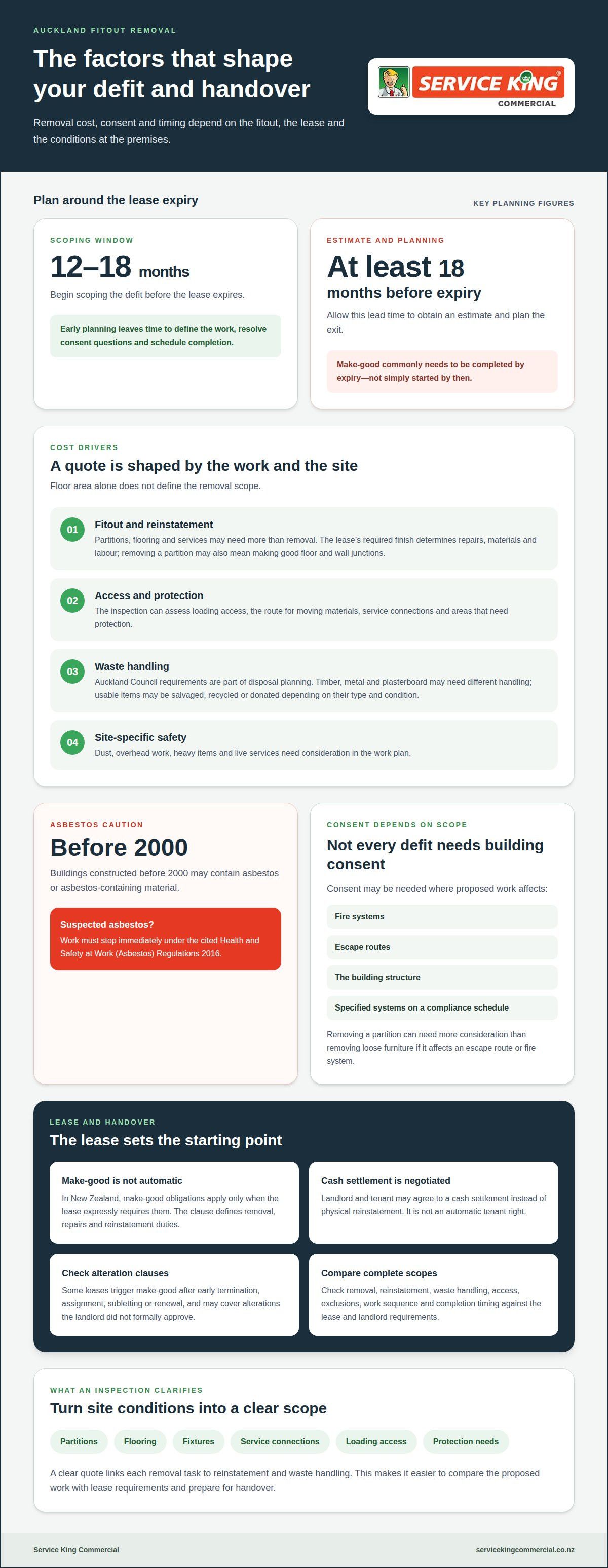
Make-good is the work required to return leased premises to the condition set out in the lease. Removing partitions, flooring or services may leave repairs beyond the removal itself. In New Zealand, make-good obligations apply only when the lease expressly requires them. The required finish therefore affects the work, materials and labour included in a quote.
A landlord and tenant may negotiate a cash settlement instead of completing the work. This can change the practical scope, but the lease requirements still need to be understood.
Waste disposal requirements
Construction and demolition waste disposal involves sorting and moving removed materials to suitable destinations. Auckland Council requirements are part of disposal planning, so the quote should explain how materials will be separated and taken from the site. Timber, metal and plasterboard, for example, may need different handling rather than being treated as one mixed load.
A contractor can assess whether usable items can be salvaged, recycled or donated, then separate them from material requiring disposal. The condition and type of each item affect that decision. Auckland Transport warns that buildings constructed before 2000 may contain asbestos or asbestos-containing material. Work must stop immediately if material is suspected to contain asbestos under the cited Health and Safety at Work (Asbestos) Regulations 2016.
Site inspections and quotes
A site inspection helps assess the fitout and the route for removing materials. It can cover partitions, flooring, fixtures, service connections, loading access and areas that need protection. These details define the work more accurately than floor area alone.
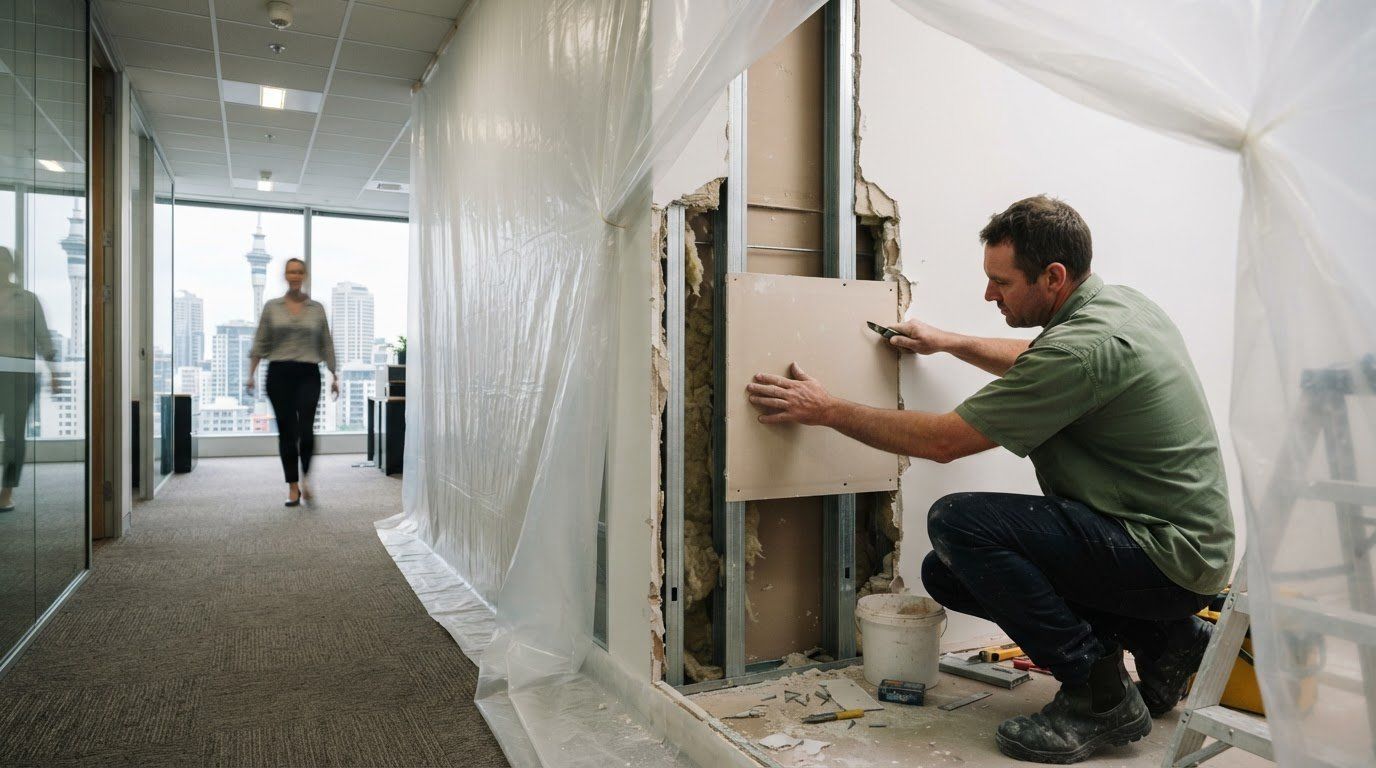
The quote should link each removal task to the required reinstatement and waste handling. Removing a partition, for example, may also mean making good the floor and wall junctions. A clear scope helps you compare the proposed work with the lease requirements and plan the handover.
Does a defit need building consent?
Not every commercial defit needs building consent. In New Zealand, work affecting fire systems, escape routes, the building structure or specified systems on a compliance schedule can require consent. Whether it applies depends on the proposed work, not simply on the removal of fixtures.
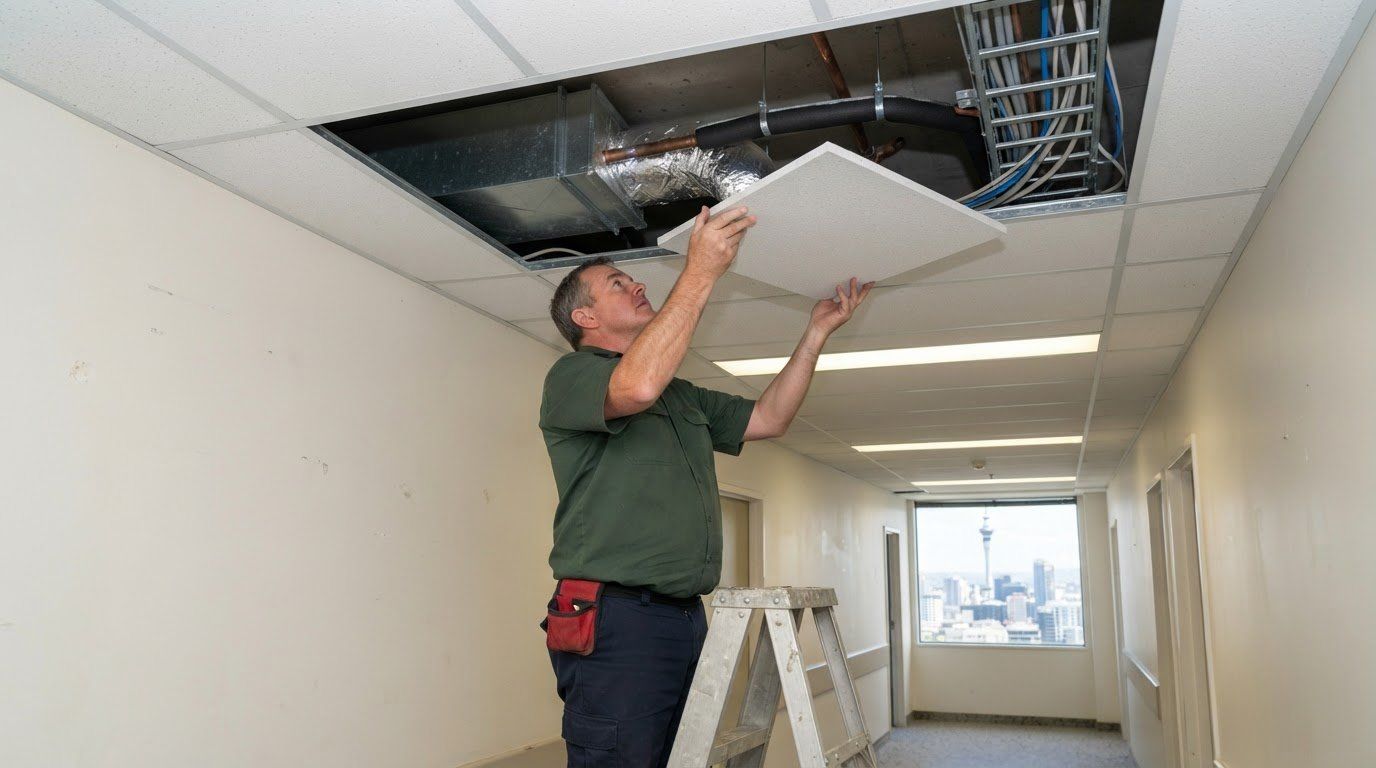
A strip-out usually starts by matching the removal scope to the lease and site requirements. The work is then planned around access, services and safety issues, before the agreed removals and required reinstatement are completed. Removing a partition, for example, may affect an escape route or fire system, so it needs more consideration than removing loose furniture.
Timing matters. New Zealand commercial tenants should begin scoping a defit 12 to 18 months before lease expiry. Allow at least 18 months before expiry to obtain an estimate and plan the exit. Early planning gives time to define the scope, resolve consent requirements and schedule work before the handover deadline.
Removal time varies between Auckland tenancies. It depends on the fitout, access, disposal needs, reinstatement and any consent process. A small open-plan space with few fixed items differs from a tenancy with partitions, service connections or work affecting fire systems. The scope and site conditions shape the programme.
Health and safety planning also affects the work. Auckland Transport warns that buildings constructed before 2000 may contain asbestos or asbestos-containing material. Under the Health and Safety at Work (Asbestos) Regulations 2016, work must stop immediately if material is suspected to contain asbestos. Dust, overhead work, moving heavy items and live services also need consideration in the work plan.
For Auckland premises, confirm the required handover condition and identify any work affecting fire systems, escape routes, the structure or scheduled systems during scoping. This helps clarify whether consent may be needed and what must be completed before lease expiry.
Commercial lease make-good and reinstatement obligations in New Zealand
The lease sets the starting point for a commercial tenant’s make-good obligations. Its wording affects the work required, the handover condition and any settlement options.
Lease make-good obligations
A make-good clause sets out how a tenant must leave the premises at the end of a lease. In New Zealand, these obligations are not implied; they apply only when the lease expressly requires them. The clause defines whether fitout removal, repairs or reinstatement are needed before handover.
Read the clause alongside the alterations made during the tenancy. Some leases trigger make-good after early termination, assignment, subletting or renewal. They may also require reinstatement of alterations the landlord did not formally approve. Fair wear and tear generally means normal deterioration over time, not damage or effects caused by the tenant’s fitout.
Commercial leases commonly require make-good to be completed by expiry, not merely started. The landlord and tenant can negotiate a cash settlement instead of physical reinstatement. This may suit both parties if they agree on the amount and responsibility, but it is a negotiated outcome, not an automatic tenant right.
Choosing a strip-out contractor
When comparing Auckland contractors, check how clearly each proposed scope matches the lease’s handover requirements. A useful comparison covers removal, reinstatement, waste handling, access arrangements and exclusions. One quote may include making good floor finishes after partition removal, for example, while another covers removal only.
Ask for the work sequence and completion timing in writing. Check that the proposal identifies site-specific constraints and any work requiring coordination with building systems. This helps distinguish a complete handover scope from a basic strip-out estimate.
Before appointing a contractor, compare the written scope with the relevant lease clauses and landlord requirements. This can reveal gaps early, such as repairs to tenant-installed fixtures or the treatment of unapproved alterations. A clear scope also supports a practical discussion if the parties consider a cash settlement instead of completed work.
How do you arrange a site inspection and quote for Auckland fitout removal?
Start by sharing the lease expiry date, premises address and landlord’s handover requirements. Include the relevant lease clause, fitout plans and available records of alterations. These details help focus the inspection on work that affects the handover. Note any building access rules, loading arrangements or restricted work areas.
During the inspection, the fitout is assessed against the proposed removal scope. This includes partitions, ceilings, flooring, fixtures and service connections, as well as how materials can leave the building. A narrow service lift or limited loading access, for example, can affect removal planning. The inspection also helps identify work requiring coordination with building management.
A useful quote separates removal from reinstatement and lists the included tasks. It should explain the scope assumptions, access arrangements, waste handling and exclusions. For example, it can distinguish partition removal from repairing the floor and wall surfaces left behind. A clear breakdown lets you compare the proposed work with the lease requirements, rather than comparing totals alone.
The price depends on the case and is given after a quote request. Key cost factors include the fitout materials, volume of work, access, disposal requirements and reinstatement finish. A written programme also helps align the contractor’s work with building access and the lease handover date. For Auckland Transport’s Devonport Wharf Unit 5, allow at least 10 days for the Authorisation to Work permit to be processed. Work on an Auckland Transport site cannot begin until that authorisation is approved.
For a premises exit involving removal and handover work, arrange an end-of-lease assessment and provide the lease requirements for the inspection.
Service King Commercial
Service King Commercial can help when your lease exit involves removal, reinstatement or repairs. Its End of Lease Service supports commercial property handovers, while Building Repair and Maintenance can address repairs identified during the exit scope. Trade Services can also support property work that needs a trade solution.
Bring the lease handover requirements and inspection findings into the discussion. This helps define the work and show how removal, reinstatement and building repairs fit together. If the landlord is considering a cash settlement, make the agreed outcome clear alongside any work still required at the premises.
For support with your commercial property exit, contact Service King Commercial.
Set up your premises exit with a clear next step
Plan tenant fitout removal in Auckland around the handover outcome, not just the day work begins. A clear written scope gives the landlord, tenant and contractor a shared reference for the work and the expected condition at the end. Keep decisions about removal, reinstatement and any agreed settlement aligned as the exit plan develops.
Before arranging the work, bring together the lease requirements, site inspection findings and landlord’s direction. This gives the contractor a practical basis for defining the work and organising the handover. If the wider property also needs attention, Service King Commercial provides exterior building maintenance as a separate part of its property support.
Set the next step in motion with the information already available. Contact Service King Commercial today to discuss your commercial premises exit. A clear plan can help you move towards handover with greater confidence.
Frequently Asked Questions
Can a landlord claim make good in cash instead of requiring the work?
Yes. A landlord and tenant can agree a cash settlement instead of completing make-good work. It is a negotiated arrangement, not an alternative the tenant can require automatically. Put the agreement in writing, stating which obligations it settles, the payment terms and any work that remains. This reduces the risk of disagreement about whether the settlement covers the full handover obligation.
Is make good compulsory in New Zealand?
Make-good is not automatically compulsory for every commercial tenancy in New Zealand. The tenant’s obligation depends on what the lease expressly requires. Review the signed lease and any later variation together, since an agreed change may affect the original wording. A clause requiring removal of tenant-installed items, for example, creates a different obligation from one requiring the premises to be returned in a stated condition.
What does tenant fitout removal in Auckland include?
The work involves removing agreed tenant-installed items and preparing affected areas for the next stage of the tenancy exit. The exact scope varies by premises. An office project might include dismantling a reception counter, while a retail tenancy could involve removing display fixtures. The written scope should state which items stay or go and whether related finishes or services need attention.
How much does commercial tenant fitout removal cost in Auckland?
There is no single price for every Auckland tenancy. The quote depends on the removal scope, materials, access, waste handling and required finish. It is easier to assess when it separates included work from exclusions. For instance, confirm whether removing a built-in counter includes making good the surfaces behind it.
What factors affect Auckland office or retail strip-out pricing?
Office and retail projects differ in the items to remove and the work around them. A fitted office may include meeting-room partitions and built-in storage, while a shop may have display units and customer-facing fixtures. The quote also reflects how materials can be moved through the building and the required handover condition. An inventory helps define the scope before work is priced.
Do you need a building consent or resource consent for fitout removal in Auckland?
Building consent can be required if defit work affects fire systems, escape routes, the structure or specified systems on a compliance schedule. Resource consent is a separate planning consideration, and whether it applies depends on the proposed work and site context. Describe the exact changes, not just “fitout removal”, when assessing consent needs. Removing a partition, for example, may have different implications from taking away loose furniture.
Recent Posts